Showing posts with label Characterization. Show all posts

Thursday, January 5, 2012

Guest Post: J.K. Rowling's Writing Process in Her Own Words, part 2

Welcome to part 2 of Shelley Souza's fabulous compilation and analysis of J.K. Rowling's writing process from Jo's own words.  Shelley has scoured old interviews to bring together anything JKR has said regarding how she wrote her phenomenal series. Part 1 was posted on Tuesday, and if you haven't read that yet, you will definitely want to check it out as well.

Here, in part 2, Shelley delves more deeply into what Jo had to say regarding her choices of names, her use of myth and folklore, and how everything was created from the core of Harry's character.

So, once again, please welcome Shelley!


A Peek Into J.K. Rowling's Writing Process in Her Own Words, part 2


When a writer who is character driven (as Rowling is) involves herself in a long project, a large amount of the material that's generated, in the creation of the characters and their world, will never find its way into the books. As she mentions in the previous quotation,[18] amassing that much material was, in part, for her own pleasure.

Part of that pleasure for Rowling is in the naming of things:
I collect names. I've always collected names, so I've got notebooks full of them.[19]
Ideas come from all sorts of places and sometimes I don't realise where I got them. A friend from London recently asked me if I remembered when we first saw Hogwarts. I had no idea what she was talking about until she recalled the day we went to Kew Gardens and saw those lilies that were called Hogwarts. I'd seen them seven years before and they'd bubbled around in my memory. When Hogwarts occurred to me as a name for the school, I had no idea where it came from.[20]
Names are really crucial to me. Some of my characters have had eight or nine names before I hit the right one. And for some reason I just can't move on until I know I've called them the right thing - that's very fundamental to me.[21]
Sometimes invention gives out. I was writing the latest chapter of Harry Potter and the Half Blood Prince and I needed to come up with another name for another potion. I sat for ten minutes at the keyboard then I just typed “X”. I thought, ‘I’ll go back and fill that in later.’ Sometimes you really want to get on with the story. Sometimes names just come to you, which is a great feeling, but sometimes it is difficult and you have to batter your brain for a while. Sometimes it comes to you while you are washing up or on the loo or something. My husband is quite used to me saying, 'Wait!' then running upstairs and writing something down.[22]
(article continues below)


The conception of new words:
I love making up words. There are a few key words in the books that wizards know and muggles, as in us non-magic people, don't know. Well, muggle is an obvious example. Then there's quidditch. Quidditch is the wizarding sport. A journalist in Britain asked me...she said to me, 'Now, you obviously got the word quidditch from quiddity; meaning the essence of a thing, its proper nature.' And I was really, really tempted to say, 'Yes, you're quite right,' because it sounded so intellectual. But I had to tell her the truth, which was that I wanted a word that began with Q—on a total whim—and I filled about, I don't know, five pages of a notebook with different Q-words until I hit quidditch and I knew that was the perfect one.[23]
And twisting the repertoire of folklore and mythology into a new narrative, to fit her story:
I've taken horrible liberties with folklore and mythology, but I'm quite unashamed about that, because British folklore and British mythology is a totally bastard mythology. You know, we've been invaded by people, we've appropriated their gods, we've taken their mythical creatures, and we've soldered them all together to make, what I would say, is one of the richest folklores in the world, because it's so varied. So I feel no compunction about borrowing from that freely, but adding a few things of my own.[24]
The liberties Rowling has taken with words, mythologies and ideas of writers she admires (Dorothy L. Sayers’ belief that romance and mystery do not made good companions in bed, for example), are the building blocks of the wizarding world. For the reader they come to life in much the way Harry did for Rowling--with a sense of excitement and surprise.
You can always tell if it's a good idea because you get a physical response to it, you get this sort of big leap of excitement.[25]
This sense of excitement, I suspect, is also the gauge by which Rowling determined whether the internal logic of her characters and their plot was credible or not. Each new idea that gave her this "big leap of excitement" provided much needed inspiration to keep her on track, at a time when life circumstances were difficult and prospects bleak.[26]
When asked about the source of her books, Rowling says, "I get it all from remembering what it was like to be a kid. So everything Harry goes through, and all these feelings of being lost sometimes and confused, these are all things I remember really vividly.”[27]
Rowling’s answers to questions James Runcie poses, at the beginning of his documentary J.K. Rowling…A Day in the Life, show how her personal values have infused the world of Harry Potter, consciously and unconsciously:[28]
Runcie: What’s your favourite virtue?
Rowling: Courage.”
Runcie: What vice do you most despise?
Rowling: Bigotry.
Runcie: What are you most willing to forgive?
Rowling: Gluttony.
Runcie: What’s your most marked characteristic?
Rowling: I’m a trier.
Runcie: What are you most afraid of?
Rowling: Losing someone I love.
Runcie: What’s the quality you most like in a man?
Rowling: Morals.
Runcie: What’s the quality you most like in a woman?
Rowling: Generosity.
Runcie: What do you most value about your friends?
Rowling: Tolerance.
Runcie: What’s your principal defect?
Rowling: Short views.
Runcie: What’s your favourite occupation?
Rowling: Writing.
Runcie: What’s your dream of happiness?
Rowling. Happy family.
The plot came entirely from Harry. This statement, more than any Rowling has made about her process as a writer, reveals how she found the internal logic that holds the story together to create a plot that is loophole free.
He really is the whole story. The whole plot is contained in Harry Potter; his past, present and future—that is the story. Harry came to me first and everything radiated out from him. I gave him his parents, then his past, then Hogwarts, and the wizarding world got bigger and bigger. He was the starting point.[29]
In A Poetry Handbook, Mary Oliver writes:
The part of the psyche that works in concert with consciousness and supplies a necessary part of the poem—the heat of the star as opposed to the shape of a star, let us say—exists in a mysterious, unmapped zone: not unconscious, not subconscious, but cautious. It learns quickly what sort of courtship it is going to be. … If you are reliably there, it begins to show itself—soon it begins to arrive when you do. But if you are only there sometimes and are frequently late or inattentive, it will appear fleetingly, or it will not appear at all.
This is what I think Rowling meant when she spoke of finding herself at the moment she hit rock bottom, when she discovered she had a strong will, and more self-discipline than she had ever suspected, to finish the only work that mattered to her.[30] When, in her darkest hour, writing was all she had left to fall back on, Fortuna smiled, because Rowling had always turned up to write, even when it didn’t appear to count.

There’s so much to say about J.K. Rowling that has helped me in my life outside of writing. But perhaps I’ll end with the two things that struck me most when I was searching for my path as a writer. In talking with Oprah Winfrey, Rowling described herself as someone who had very little self-confidence in most things except her ability to tell a story. She also told Oprah that she had never felt as excited about an idea as when Harry and a school for wizards leapt unexpectedly into her mind, even though she had never considered writing for children.[31] The story, she says, chose her; she didn’t choose it.[32]
I think that the biggest lesson from the success of Harry Potter is that you need to try not to follow a trend. It's almost a cliché. You have to follow your heart. In Harry Potter, the wand chooses the wizard; and when the wand chooses you, you take it. You don't try to find which other books are selling, which ones are hot right now.[33] Arthur Levine
“How do you want to be remembered?” Runcie asks J.K. Rowling at the end of his documentary.

“As someone who did the best she could with the talent she had.”[34]

The creative process is a mysterious thing. It's not linear, and it has its own agenda. It's not there for us to use it—we are here to be used by it. In this sense, J.K. Rowling gave fully of herself—her intelligence, wit, morality, political beliefs, knowledge of literature, life experience, and abiding faith in the redemptive power of love—to the agenda of the creative impulse that chose her to write Harry Potter. Her conviction in the one thing she believed she could do—tell a story—and her belief in the story that chose her, is the reason fans of all ages have fallen in love with Jo Rowling the person, not just with J.K. Rowling, author of the Harry Potter books. Through learning about what inspired her process as a writer, I gained insight into trusting my own.

-- Shelley Souza


(Check Out JK Rowling's Newest Release -- Harry Potter and the Cursed Child here!)

BIO
Shelley Souza received a Master of Fine Arts in directing from U.C. Irvine and spent over two decades developing and staging new plays by established and emerging playwrights. She has authored hundreds of articles on new technology (which she loves) and ghostwritten four books of non-fiction for clients of an independent publisher. She is a member of the Authors Guild and SCBWI.


[18] http://www.youtube.com/watch?v=aDhtJU7uLrQ
[19] http://www.accio-quote.org/articles/1999/1099-connectiontransc2.htm
[20] http://www.accio-quote.org/articles/2001/1001-sydney-renton.htm
[21] http://www.accio-quote.org/articles/1999/1099-connectiontransc2.htm
[22] http://www.jkrowling.com/textonly/en/news_view.cfm?id=80
[23] http://www.accio-quote.org/articles/1999/1299-wamu-rehm.htm
[24] http://www.accio-quote.org/articles/2005/1205-bbc-fry.html
[25] http://www.accio-quote.org/articles/2005/0705-edinburgh-jones-official.html
[26] http://www.youtube.com/watch?v=p6-6zaa4NI4
[27] http://www.accio-quote.org/articles/1999/0199-scotlandsunday-goring.html
[28] http://www.youtube.com/watch?v=p6-6zaa4NI4
[29] http://www.jkrowling.com/textonly/en/news_view.cfm?id=80
[30] http://www.ted.com/talks/jk_rowling_the_fringe_benefits_of_failure.html
[31] http://www.youtube.com/watch?v=9Y8TJqBtV8Y
[32] http://www.youtube.com/watch?v=kn7nlfoMcwQ
[33] http://www.accio-quote.org/articles/1999/1013-nyt-levine.html
[34] http://www.youtube.com/watch?v=p6-6zaa4NI4

Tuesday, December 13, 2011

Do Your Secondaries Have Lives of Their Own?


Harry Potter is all about Harry.  He's our hero.  He's the Boy Who Lived who is prophesied to defeat He Who Should Not be Named.  So everything that happens in a Harry Potter book should be all about him, should in some way contribute directly to his hero's journey...right?

And yet, in Rowling's world, many of her characters, aside from her hero, have compelling goals and journeys of their own that only indirectly affect Harry's.

Fred and George's business ventures are a good example.  There are points when their goals and Harry's intersect, such as when Harry gives them his Tri-Wizard gold as starter capital, or when they show Harry some of their dark arts defense products -- which Draco later uses against Harry and the Order.  But by and large, the twins' joke shop and Harry's quest to end Voldemort are two separate journeys.

In Chamber of Secrets, Filch tries to use Kwikspell to improve his magical abilities.  Lockhart gives advice to Hagrid on how to keep kelpies out of a well.  Percy snogs Penelope in secret.  And in Half-Blood Prince, Mrs. Weasley comforts Tonks on her relationship woes with Lupin.

Monday, October 3, 2011

Tricking out Your Characters, a la Fred, George, and Peeves

I've covered a few examples of archetypes on this blog, such as with Threshold Guardians and the Forbidden Door. Today, I'd like to look at an archetype that, in the write hands, can be one of the funnest to portray. Tricksters.

Tricksters are usually the center of fun, mischief, and mayhem in the story. They delight in upsetting the status quo or in “taking the mikey” out of other characters or the hero. They present the hero with a challenge unlike other characters as they question authority and promote chaos--encouraging the hero to question as well.

For tricksters in Harry Potter, we need look no further than Fred and George Weasley. They fit the Trickster description to a Wesley sweater embroidered T. Their spiritual counterpart is Peeves, which is why it was so delightful at the end of OotP, when Gred and Forge passed their mischievous torch to Peeves, and he seized it wholeheartedly.

   "If anyone fancies buying a Portable Swamp, as demonstrated upstairs, come to number ninety-three, Diagon Alley-- Weasleys' Wizarding Wheezes," [Fred] said in a loud voice. "Our new premises!"
   "Special discounts to Hogwarts students who swear they're going to use our products to get rid of this old bat," added George, pointing at Professor Umbridge.
   "STOP THEM!" shrieked Umbridge.
   "Give her hell from us, Peeves."
   And Peeves, whom Harry had never seen take an order from a student before, swept his belled hat from his head and sprang to a salute as Fred and George wheeled about to tumultuous applause from the students below and sped out of the open front doors into the glorious sunset.

Like many fans, I find Peeves and the twins’ antics totally amusing, and I fully understand why Dumbledore keeps Peeves about the place. In holding your reader's attention, it’s important to have someone kick things up a bit, to foster a constant element of surprise. Plus, there's the all-important trickster element of being able to say and do what no one else will:

“Oh potter, you rotter, oh what have you done,
You're killing off students, you think it's good fun.
  (Peeves, from Chamber of Secrets)

Without the Trickster upsetting the status quo, life would not only be duller, but the hero’s path more difficult. Tricksters provide aide for the Hero, if only indirectly. Not only can they poke the hero’s flaw (oh Potter you Rotter) quite painfully, but by showing clearly a different mindset, an opposing world view, an alternate way of being, they enable the hero to do the same. As Ginny says, when you’ve hung around Fred and George for a while, you start believing anything is possible.

JKR magnificently uses her Tricksters to not only upset the status quo, but to propel her hero onward in his quest. Without Fred and George, Harry would definitely not have discovered as many secrets about Hogwarts and his father.
   "This, Harry, is the secret of our success," said George, patting the parchment fondly.
   "It's a wrench, giving it to you," said Fred, "but we decided last night, your need's
greater than ours
."
   "Anyway, we know it by heart," said George. "We bequeath it to you. We don't really
need it anymore."
   "And what do I need with a bit of old parchment?" said Harry.
   "A bit of old parchment!" said Fred, closing his eyes with a grimace as though Harry
had mortally offended him. "Explain, George."
   "Well... when we were in our first year, Harry-young, carefree, and innocent -"
   Harry snorted. He doubted whether Fred and George had ever been innocent.
   "Well, more innocent than we are now-we got into a spot of bother with Filch."
   "We let off a Dungbomb in the corridor and it upset him for some reason -"
   "So he hauled us off to his office and started threatening us with the usual -"
   "--dentention--"
   "--disembowelment--"
   "--and we couldn't help noticing a drawer in one of his filing cabinets marked Confiscated and Highly Dangerous." ...
   "It's not as bad as it sounds, you know," said George. "We don't reckon Filch ever
found out how to work it.
He probably suspected what it was, though, or he wouldn't have
confiscated it."
   "And you know how to work it?"
   "Oh yes," said Fred, smirking. "This little beauty's taught us more than all the
teachers in this school
."
   "You're winding me up," said Harry, looking at the ragged old bit of parchment.
   "Oh, are we?" said George.
   He took out his wand, touched the parchment lightly, and said, "I solemnly swear that
I am up to no good
."

Seriously, who else besides Fed and George would ever think to use that particular sentence as a password? It is through that Marauder's Map that Harry discovers not only passages into and out of the school, but the secrets to his father's friends and the truth of his betrayer.  It is also through this map that ultimately Harry discovers the link between Draco and the Room of Requirement -- a link that allows the entry into Hogwarts of Death Eaters at the end of Half-Blood Prince, and parents and friends to fight against Voldemort at the end of Deathly Hallows.

When, at the end of Deathly Hallows, Harry and friends and the reader as well are suffering from the loss of Fred, Tonks, Lupin, and all the others, when our hearts are too heavy to end on a positive note, it is that trickster Peeves who says what no one else will and helps start the process of healing:

"We did it,we bashed them, wee Potter's the one.
And Voldy's gone moldy, so now let's have fun!"

Have you considered a trickster to help shake up your characters, to provide a different outlook on your world?  If so, how have you incorporated a trickster into your story?

(Check Out JK Rowling's Newest Release -- Harry Potter and the Cursed Child here!) 

Peeves picture credit.

Friday, September 2, 2011

All the Kreacher's Men

One excellent way to demonstrate character in a story is to show how your hero or secondary treats other people.  Or, in the words of the immortal Sirius Black, "If you want to know what a man's like, take a good look at how he treats his inferiors, not his equals." (GoF, p. 525)  Through the course of the last three books, JKR gives the reader insight into the character of three men based on how they treat one considered an inferior, a house-elf named Kreacher.

Sirius Black -- In Order of the Phoenix, Sirius hates the sight of Kreacher and treats him terribly. But it is not Kreacher himself whom Sirius hates as much as it is what Kreacher stands for. Kreacher is the last surviving remnant (aside from Sirius) of the pureblood, aristocratic, and extremely bigoted Black family. Sirius seems to hate everything about his family and what they stood for, which resulted in him running away at sixteen to go live with Harry's father, James. Sirius' mother subsequently blasted her son from the Black family tree tapestry.

Unfortunately, this very understandable feeling Sirius harbors towards his family's prejudices results in him treating one beneath him with an attitude bordering on his family's bigotry. And in the end, is what causes Kreacher to fatally betray Sirius to his Death Eater cousin Bellatrix.

Lord Voldemort -- In the "Kreacher's Tale" chapter of Deathly Hallows, Kreacher reveals to Harry, Ron, and Hermione how his master, Sirius' brother Regulus, a Death Eater, had requested that Kreacher go with Lord Voldemort on a secret mission. This mission involved Kreacher accompanying Voldemort to hide his Horcrux locket in the cavern. Voldemort wished for a house-elf to accompany him because he considered the elf's magic less important and the elf himself expendable. Voldemort forced Kreacher to drink the basin of poison and then left the elf alone to die at the hands of his zombie-like Inferi.

Wednesday, August 3, 2011

More Shining Moments from our Awesome Heroes

Two weeks ago, I posted the first half of the character development arcs for the Final Chapter series, analyzing the secondary characters. Here, finally, is the promised second half with the major characters.

Remember that to successfully judge a character arc, we need to look at 1) where that character started, 2) what obstacles they had to overcome, 3) what changes occurred along the way, and 4) where they ended up.

Dumbledore:

Dumbledore began the series as the wise mentor and ended as the same. However, along the way we discovered that he had stumbled in his past, rather largely. By allowing his desire for fame and power to overshadow his responsibility to his family, he caused the death of his sister and the loss of respect of his sole-surviving relative. But it wasn't just this snippet of backstory which JKR used to round Dumbledore out. Throughout the story we saw him holding back from trusting others, playing his cards too close to his chest, and in the end, manipulating those around him.

In a way, Dumbledore's arc was more descending than ascending, at least as it took shape in the reader's mind. However, because Dumbledore had acknowledged his sins and tried to prepare Harry to do better, all the while choosing a position of guidance at Hogwarts rather than of power at the Ministry, he is restored to his chair of benign mentorship by series' end.

Dumbledore's Shining Moment -- foreshadows Harry's a book later. When Dumbledore lays down his life so that Harry may carry on, he shows that he is devoted to the true greater good and can, hopefully, make amends for the life he once lost by the many he is acting to save.

Snape:

Snape is such a complex figure that he deserves his own book. It's on my list of things to do! :0 But for now, to put Snape's character arc as simply as possible…

Snape, like Dumbledore, I believe changed more in the reader's mind than he did in his own. He remained true to himself by remaining loyal to Dumbledore and his lost love. As the stakes and danger increased for him, and Dumbledore pushed him to greater acts of spying and risk, Snape met these challenges bravely, even if irritably, to protect the son of the man he loathed and thereby preserve the memory of the woman he loved.

Ironically, Snape's Shining Moment came when he killed Dumbledore. For to honor Dumbledore's wishes and protect Harry's (and Draco's) life, Snape risked the damage his own soul that this horrific act would bring.


Voldemort:

One could argue that as the embodiment of pure evil, Voldemort had no character growth. What JKR did instead with this antagonist is to let us see glimpses into his past that shaped him into the demon he became. Playing on her main themes of love and choice, Voldemort was born and raised without love and then, on his own, made the wrong choices.

Even when given the opportunity for his own Shining Moment at the end by Harry, he could not bring himself to either understand or grab it. For to a man who has never known love or given love, there is no way for him to grasp any empathy for those lives he has torn apart. And empathy is a necessary component of remorse.


Ron:

When we meet Ron he is a poor, somewhat neglected younger brother, living in his older brothers' shadows...which eventually becomes Harry's. By series' end, he has battled with jealousy and his own fears of being loved less to become a passionate and staunch defender of all those he loves. In the Battle of Hogwarts, he is able to throw off Voldemort's silencing charm before anyone else to defy the Dark Lord.

Ron's Shining Moment -- came with his defeat of his own personal Horcrux. The Slytherin locket had held such power over him because Voldemort had played on Ron's deepest fears and insecurities. By returning to those he'd abandoned and stabbing the locket, Ron conquered his dark side and became a stronger man and a more loyal friend.

Hermione:

In the beginning, Hermione was portrayed almost the exact opposite of Ron. She was the know-it-all witch who no one liked. But her fears concealed her inner insecurities of being in an unfamiliar world and her ability to make friends. Along the way, Hermione learned to break a few rules, stand up for herself, stand up for others, and remain strong, even when once again betrayed by the one she'd come to love.

Hermione's Shining Moments are so many that choosing one is hard to do. But I'd vote for her getting the Trio out safely from the Lovegood home as the Death Eaters approached. It was her quick mind that not only saved herself, Ron, and Harry from capture, but also showed them long enough to the Death Eaters so that Xenophilius would not be blamed and harmed.

Harry:

As the hero of the story, Harry, of course, has the most time spent on his character growth. Through making both right choices (Sorting Hat) and mistakes he learned from (Sectumsempra) along the way, Harry overcame every obstacle thrown at him, not only by Voldemort and his band of Death Eaters, but by Harry's own weaknesses. By learning to trust in others and to not seek power for its own sake, Harry has developed himself into a young man capable of willingly and deliberately giving his life so that others may live.

This Shining Moment of Harry's when he gives his life in the dark forest, enables his resurrection in the Great Hall as the man who could strip the power away from Voldemort without damaging his own soul.


While writing in an exotic, fantastic world does give JKR a certain edge in creating eccentric, memorable characters, her basic skills are still ones we can apply to our own writing, no matter the genre. Draw your characters, even your secondaries, in engaging, intriguing, yet realistic detail. Get at their hearts to understand what they are good at...and as with the boggart in the cupboard, what they most fear.

Give each character a goal and a reason to be motivated toward this goal. Make each one face a stumbling block, a hardship or conflict they have to fight against toward attaining this goal. Make your characters conquer real challenges before achieving their triumphs. And through all this, show your characters' choices and development with action, not just with narrative words.

What shining moment have you recently used in finalizing a character arc for one of your characters?

Thursday, July 21, 2011

The Shining Moments of Character Development

This is the fourth in a series of posts to analyze the final chapter, "The Flaw in the Plan," of Deathly Hallows.

(Spoiler Alert -- I truly feel this is not necessary as the books have been out for four years. However, if you're a fan of the movies who has not read the books, you have been warned!)

When finishing a story successfully, there is little (if anything) that ranks higher in importance than drawing your characters to a final, fulfilling conclusion. For JK Rowling, in capping off this epic, massive, seven-tome series, the pressure must have been weightier than Hagrid standing on Gawp's shoulders.

Not only did JK Rowling have impossibly high expectations from her fanbase, many of whom had written their own fan-fiction versions of the final battle, but she also had a humongous cast of characters to deal with, many of whom were competing with each other for most endearing role.

How well did she bring her characters to their final destination and how did she do it?

To successfully judge a character arc, we need to look at 1) where that character started, 2) what obstacles they had to overcome, 3) what changes occurred along the way, and 4) where they ended up. I'll cover the major secondaries below, but the primary characters will have to wait for their own post. Otherwise, this parchment would rival one of Hermione's.

Please note that even though these analyses seem rather long, I'm truly keeping them as short as possible, just hitting the highlights. It is not my goal to document every aspect of that characters growth…which would require a book rather than a blog post…but rather to point out what is most necessary to help us as writers see the techniques JK used to show (not tell) her characters' growth.


Neville -- started off a fumbling, forgetful, awkward, picked-on child. His character growth is startling. Throughout the series, Neville had to face not only the condescension from the other students, but his grandmother as well, all while living with the constant pain of seeing his parents as empty shells. But through his incredible skills in herbology, Neville began to believe in himself. He developed his own brand of bravery and strong convictions, obviously like his auror parents. When pressed to defend his friends, and to stand up against those he believed wrong, he became a true resistance leader and proved himself worthy of not only his parent's heritage, but his place as destroyer of the last, and only living and deadly, Horcrux.

Neville's shining moment is of course when he pulls Gryffindor's sword form the Sorting Hat and uses it to slay Nagini, the final Horcrux. Gryffindor's sword is like the badge of courage to the Cowardly Lion, a symbol of what was already abundantly clear -- that Neville was a brave leader of many.


Luna -- Luna started her place in the story as a rather flighty, imaginative, childlike teen, who, because of her unusual beliefs, was ostracized by many other students. But even through this, perhaps because of her earlier loss of her mother, she had the ability to see things and understand the mysteries of life others did not. This ability was put to the test as she joined in Dumbledore's Army and made true friends, but faced new adversaries, more merciless than her school chums. Forced into her own personal imprisonment and a certain loss of innocence, Luna maintained through it all her faith in human nature and her willingness to look at life differently. In the end, she was able to channel her belief in the fantastical and her extreme loyalty to her friends towards a great benefit, as she did when fighting in the Final Battle and when helping Harry escape from his admirers in the Great Hall at its end. Pointing out a Blibbering Humdinger she knew did not exist, Luna laughed at her own self in a way.

Luna's shining moment -- actually comes before the final chapter when she helps Harry find the diadem of Ravenclaw by getting him into Ravenclaw tower to view Rowena's bust. When confronted by Alecto Carrow, Luna successfully stuns the Death Eater.


Ginny -- To become our hero's love interest, Ginny had to prove herself worthy and strong. She goes from being a shy little sister to a very popular girl-about-campus to an understanding and comfortable companion for Harry. However, along the way, she faced her insecurities from knowing Harry barely noticed her, and certainly didn't look at her as anything other than his best friend's sister. She got along with her own life, becoming a prowess on the Quidditch field and a powerful witch capable of casting a Reductor Curse that even stopped a Death Eater during the Ministry of Magic battle in OotP. She also developed a strong note of compassion for those picked on by others, as shown when she goes with Neville to the Yule Ball and stops others from picking on Luna.

Ginny's shining moment is when she fights Bellatrix (along with Hermione and Luna), proving herself once again a valuable member of Dumbledore's Army, even though underage, and an opponent far stronger than her 16 years, a brave girl determined to stand up to her brother's murderers.


Draco -- Draco's character growth could be seen in what he does not do rather than what he does. It is the fact that in two critical moments he does not act upon the extreme prejudice and privilege to which he has been brought up and ingrained in him that makes his story compelling. Draco starts the series as a simple arrogant bully, determined to make anyone who does not align with him, as Harry chose not to, suffer. As the series progresses, and the reader meets Draco's father, we understand that he has been trained to hold the attitudes he possesses. Still, even when Draco is forced to kill to protect his family's position and his father's life, he is unable to do so. His hesitancy stems from the fact that he is not the black heart Voldemort, and sometimes Harry, would have him be. His mother's love has protected him from the depths of hell that has claimed Voldemort's lost soul.

It is in the Room of Hidden Things during the final battle where Draco has his shining moment. Unlike Crabbe, who shoots Avada Kedavra at Hermione, Draco stops him with yells to not kill. He then seeks to protect his stunned friend Goyle from the Fiendfyre, even to the point of risking his own ability to save his life by refusing to drop Goyle's hand to climb aboard Harry's broom. Draco has demonstrated that he cares about someone beyond himself and that, considering his upbringing, his inaction is a show of heroism.


Hagrid -- Hagrid started the story almost as the adult version of Neville -- rough and stumbling, made fun of by the pureblooded Draco, and forced by the actions of Tom Riddle to live his life literally on the periphery of wizarding society. Hagrid's road to growth begins with his journey to recruit the giants, a crucial role he fulfills along with headmistress and other half giant Madam Maxime. It is when Hagrid encounters the community of giants that he truly starts to stand up for himself and reclaim an aspect of his life that was once lost. Hagrid brings his midget-giant half-brother Grawp home to Hogwarts, putting himself in physical harm in the process. It is Hagrid's firm belief in the good in all living creatures, no matter how monstrous, that is his true strength and what brings him to his triumphant concluding arc. For it is largely because of Hagrid that centaurs, thestrals, and Grawp join the final battle. Their fierce attack upon the Death Eaters ushers the combatants into chaotic confusion into the Great Hall where Harry can take his final stand.

Hagrid's shining moment is when in a moment reminiscent of him bringing the sleeping baby Harry to Privet Drive at the beginning of the series, Hagrid carries the pseudo-dead body of Harry into the final battle. In alchemical terms, Hagrid symbolizes the Red Man who ushers the completely broken down body of the prima material into his golden moment of resurrection.


Mrs. Weasley -- Molly went from being the ultimate Mum to the fiercest Amazon on the battlefield, singlehandedly bringing down Voldemort's most loyal Death Eater. Along the way, we see Molly progress from a somewhat harried mother, not sure of which twin is which, giving Ron the sandwiches he doesn't like, to taking Harry in as one of her own, to standing up to Sirius when she believes he is in the wrong. Along the way she becomes the fierce motherly lioness, both capable of defending and attacking her own cubs when they do wrong, while battling her very real fears of the potential deaths of her beloved children.

Molly's shining moment was, of course, her slaying of Bellatrix to protect not only her daughter, but all the other children in the wizarding world as well. How many of us will ever forget -- "NOT MY DAUGHTER, YOU BITCH!"?

JKR deliberately choose this mother and housewife to be the killer of her most evil female counterpart. Jo said this was very important to her, to show the strength and ultimate veracity of maternal love.


McGonagall -- Contrasted with Mrs. Weasley, McGonagall, was introduced to the reader as a very stern, upright person, instantly recognized by Dumbledore, even as a cat, because of her rigid composure. She tolerated no shenanigans either inside or outside her class, and was even willing to deduct points from her own house for Harry's rule breaking. Even though awesome in powers herself, she seems to be always secondary in comparison to the wisdom of Dumbledore or the intrigue of Snape. However, throughout the series, her warm side began to seep through the cracks. Is it she who uttered the first and most horrible scream of denial at the sight of Harry's "dead" body.


It is in the Final Battle where Minerva McGonagall fulfills her latent potential in her shining moment. True to her name as the goddess of war, she took charge inside the castle to prepare for the battle of Hogwarts. She prepared the other professors to protect and enchant the castle, transfigured the suits of armor herself to do battle, then organized the younger student to leave and the older to stay and protect. She made a brilliantly capable, as well as warmhearted, commanding general.


So much of the strength of JK Rowling's series lies in the depth and quirkiness of her characters. I think she was able to bring these pen and paper creations to engaging life because they lived so fully in her head. This ability to visualize her creations in such detail must be because she's the kind of person who finds people an endless source of amusement and fascination. I imagine that JKR is a people watcher, constantly studying those around her and analyzing why they act the way they do. It is this fascination with human nature, with a benign sense of humor and understanding of their foibles, and yet a rapier-sharp anger at the needless bigotry and greed that causes others harm and loss, which she is able to so successfully embody in her characters.


Do you watch people? Do you study them, seeking below their superficial appearance to try to understand what motivates them? What unique characteristics, mannerisms, foibles make each person you meet on a daily basis completely unique, and in their own way interesting? How can you bring these characteristics to life on the paper?

Everyday people can be just as intriguing as Hagrid and Luna…if you find them so. If you're a person who likes to study and understand others, you can learn the techniques to make your own ink and paper creations breathe a full life as well.

While writing in an exotic, fantastic world does give JKR a certain edge in creating eccentric, memorable characters, her basic skills are still ones we can apply to our own writing, no matter the genre.  Draw your characters, even your secondaries, in engaging, intriguing, yet realistic detail.  Get at their hearts to understand what they are good at...and as with the boggart in the cupboard, what they most fear.  Give each character a goal and a reason to be motivated toward this goal.  Make each one face a stumbling block, a hardship or conflict they have to fight against toward attaining this goal. Make your characters conquer real challenges before achieving their triumphs. And through all this, show your characters' choices and development with action, not just with narrative words.

Note: The primary characters I will cover in a separate post include: Ron, Hermione, Dumbledore, Snape, Voldemort, and, of course, Harry.

What tools do you use to complete your character arcs? How do you show with action their overcoming of obstacles?

(Check Out JK Rowling's Newest Release -- Harry Potter and the Cursed Child here!) 

Tuesday, June 21, 2011

Threshold Guardians at the Forbidden Door

As writers, whether consciously or unconsciously, we employ the use of archetypes to transport our characters better into the reader's mind. In my understanding, there are two types of archetypes: those I like to call character archetypes which distinguish personalities (the nurturer, the librarian, the femme fatale, the bad boy), and another set I call storyline archetypes (the hero, the trickster, the shadow, the mentor, the threshold guardian) which defines that character's role in the story.

Each of these sets of archetypes deserve a post on their own, which I will do in the future. Today, however, I'd like to focus on one particular storyline archetype--the threshold guardian.

Threshold Guardians are placed at portals to new worlds or gateways to new challenges to keep the unworthy out. A guardian may be a good-hearted ally of the hero, looking out for his best interest, or he may be an accomplice of the villain, seeking to harm or hinder the hero from completing his quest. Either way, as part of his quest, the hero will be tested by his ability to overcome or win over the many Threshold Guardians he will encounter along the way.

From the Portrait of the Pink Lady, to Dobby sealing the entry to Platform 9¾ in CoS, to the grindylows guarding the “treasures” in the lake during the Triwizard Tournament, Harry encounters numerous thresholds and their guardians throughout the series. However, I’d like to focus on one type of Gateway and Guardian to look at closer.

In his book The Writer's Journey, author Christopher Vogler talks about the Law of the Secret Door (p. 112-113) (also related to Carl Jung's "Forbidden Door"). Many myths include a set-up whereby the heroine is told she must never eat from a certain tree, never open a certain box, or never pass through a certain door, upon pain of death. Of course the myths I’m referring to are Eve in the Garden of Eden, Pandora with her box, and Belle in Beauty and the Beast. We all know what happens, what is sure to happen anytime this sort of situation presents itself in a story. If you have children, you probably have this happen quite regularly in your life as well.

The power of curiosity is universal. In the words of the immortal Dumbledore, "Curiosity is not a sin.... But we should exercise caution with our curiosity... yes, indeed" (p. 598, GoF). Whereas later in the series Harry more strongly develops his own driving need to set the world right by stopping Voldemort, in the first three books, curiosity is one of the prime motivators driving on Harry, Ron, and Hermione.

Monday, June 13, 2011

Characterization in The Boy Who Lived

In my prior post, Time-Turning Back Seven Books, I set out to analyze the first chapter of Philosopher's/Sorcerer's Stone to uncover any secrets which can be gleaned regarding the catalyst that started the Harry Potter series on its initial rise.

This series of posts will break apart this first chapter according to:

1) characterization
2) world building
3) mystery
4) stakes/conflict
5) backstory, and
6) voice

So, let's start the ball *rowling* with characterization!

For an overview -- this beginning chapter is constructed in such a way that the reader is first introduced to the slightly-exaggerated and repulsive Muggle family, the Dursleys. Although a couple of magical people or groups are sprinkled in through Mr. Dursley's work day, it is not until he turns the lights out at night that the three main wizarding characters step onto the scene -- McGonagall, Dumbledore, and Hagrid. By setting it up this way, JKR juxtaposes the characteristics of small-minded Muggles against the exciting wizards. And, as discussed in the first post of this series, by describing the Muggles with an intimate note of disdain, JKR prepares the young reader to identify strongly among the way cooler wizards.

(article continues below)


Of course, the primary ingredient for JKR's remarkable character development is her strong, vivid imagination.  She could not have conveyed the wizards and Muggles so vividly onto the page if she had not first imagined them in her head so vibrant in personality and so colorful in detail. But, as writers, we all know that it's one thing to see (and hear) people in your head, it's totally another to get them down clearly on paper in black and white so that your reader can magically tune into your vision as if expertly skilled in legilimancy. So, what specific techniques does JKR use to convey these characters?  Here's a few I've discovered:

  1. hooks
  2. weaving
  3. action tags
  4. words of others
  5. action and responses


1) Hooks:

I have a whole post on hooking your character, so I will only cover it briefly here. Hooks are an interesting detail that helps the reader visualize that character and distinguish him from others when first being introduced.


  • Mrs. Dursley -- long neck -- which hints at her snooping on neighbors, which also hints at her concern over keeping up appearances
  • Dumbledore -- sparkling eyes behind half-moon spectacles -- hints at his goodness of character and his wisdom
  • Hagrid -- giant size and emotional -- hints at his wild side and his good heart

Hooks are somewhat simple because they are most effective in the beginning, before the deeper character development has truly taken off.

2) Weaving:

Notice how references to the characters of the Dursleys are woven throughout here and there -- Mrs. Dursley spying on neighbors, then later, her fear of anyone learning about the Potters.  Mr. Dursley ignoring, in fact almost praising, Dudley's temper tantrum, then later his anger at the funny-dressed people. These examples of Mr. and Mrs. Dursley's character are woven in throughout the first half of this first chapter, with each example giving the reader a bit more understanding of who these people are.

When introducing a character to your reader, it is very tempting to tell the reader ALL from the first page. As writers, we've generally spent a very long time creating and getting to know these figments of our imagination, and we want our reader to love them as much as we do. So, we oftentimes flood our story with all we know as soon as possible. But, this tendency leads to telling rather than showing. As actions speak much louder than words, the reader will get to know your character much better as they see her in action. So, while some initial description is necessary by way of introduction, try to keep it to a minimum, and be as creative as possible with it. By far, the most effective way to let your reader and your characters get acquainted is by weaving in all those wonderful tidbits you've thought up naturally through the course of the story. And the most interesting techniques for weaving in character is through bits of action or dialogue.

3) Action Tags:

I don't know if there's another way of naming these things, but action tags are the brief narrative descriptions between dialogue that inform the reader as to who is talking now. Unlike the standard dialogue tags (he said, she whispered), an action tag shows action, but because of its location right before or after dialogue, also informs the reader that the person acting is also the person speaking.

Action tags are a great way to weave more action into your story as well as to develop character.

"My dear Professor, surely a sensible person like yourself can call him by his name? All of this 'You-Kow-Who' nonsense -- for eleven years I have been trying to persuade people to call him by his proper name: Voldemort." Professor McGonagall flinched, but Dumbledore, who was unsticking two lemond drops, seemed not to notice. (p. 11)

Word counts are decreasing. Now, more than ever, you want to get the most bang out of every word you choose. Optimize your tags by making them pull double (or triple) duty. Action tags that build character do this.

4) Words of Others:

If you post a review of your own novel, not many people are going to pay attention. But if someone else posts, readers will notice.

Likewise, readers will be much more interested in what characters have to say about each other rather than how the author chooses to describe her babies.

For JKR, McGonagall's role in this first chapter is largely to give voice to a lot of character description (as well as backstory) that otherwise could not be written as dialogue without her presence. Thus, McGonagall's interrogation of Dumbledore puts so much of the necessary narrative info into interesting dialogue.

Think of how much more effective it is to have McGonagall voice her reaction to Harry being left in the care of his aunt and uncle. Her disdain for this Muggle family immediately helps the reader to sympathise with Harry better than a narrative lay-down would have done. Plus, she verbalizes a great, active example of Dudley kicking his mother for sweets.

Before Hagrid roars onto the scene, the reader is given a heads-up through McGonagall concerning his character. First, he's late. Then, McGonagall's voices her dismay that Dumbledore trusted him with Harry's care. Dumbledore's assertion that he would trust Hagrid with his life lets the reader know Hagrid is a complex man viewed in a contrary manner by differing POVs. Thus, we are put on high alert for the appearance of the flying motorcycle and the giant, wild man himself, whose "feet in the leather boots were like baby dolphins." Really! I would never have thought to describe feet as dolphins!

Finally, this argument between McGonagall and Dumbledore about Hagrid's trustworthiness and Harry's placement with his aunt sets Dumbledore up as someone who thinks differently, more deeper, than the normal person. JKR did not have to TELL the reader any of this; she showed it through the words of McGonagall.


5) Action and Response:

This concept is very simple. How characters act and how they respond to the situations around them should contribute toward their character development. In other words, a character should always act and respond in character (unless so provoked that it forces them outside their comfort zone).

Mr. Dursley, when spying people on the street wearing robes, gets angry.  Mrs. Dursley sips her tea through pursed lips.  Dumbledore, in the midst of a very serious conversation, offers McGonagall a lemon drop.

In scenes with multiple characters, you can differentiate characters from each other and build their personalities by comparing and contrasting their actions and responses. For example:

McGonagall arrives on Privet Drive in the early morning as a cat. She sits on the Dursley gate all day, spying on them, waiting for Dumbledore's arrival.

Dumbledore arrives in the dark of night, appearing suddenly in a darkened corner. He uses a curious silver instrument to extinguish the lights, and instantly sees through McGonagall's disguise.

Hagrid arrives on top of a flying motorbike, cradling baby Harry in his arms.

Now, look near the end of the first chapter, after Dumbledore has left Harry on his aunt's doorstep and tucked the letter into his bundle of blankets:

For a full minute the three of them stood and looked at the little bundle; Hagrid's shoulders shook, Professor McGonagall blinked furiously, and the twinkling lights that usually shone from Dumbledore's eyes seemed to have gone out. p. 16

JKR uses one action to show us three varying responses from her characters, which help the reader understand their differing personalities.


This post is not meant to be a comprehensive listing of all the techniques JKR uses in this first chapter for character development, but it gets us started. What other techniques have you spotted?

** As a side note, look at the initial description of Dumbledore when he arrives on Privet Drive -- notice those "high-heeled, buckled boots." After JKR announced that she'd always thought of Dumbledore as gay, I often wondered if she truly had from the get-go. Why would she not have included it (upfront) in the story, I wondered. But these boots are a strong hint that maybe she really did. :-)

(Check Out JK Rowling's Newest Release -- Harry Potter and the Cursed Child here!)  

Tuesday, May 31, 2011

Hooking Your Characters

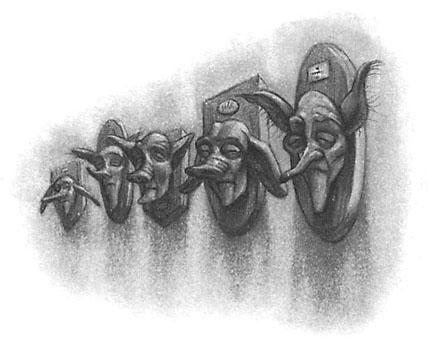
Who could ever forget the line of house-elf heads adorning the walls of Grimmauld Place?  Cut off and mounted on plaques when they could no longer carry a tea tray, these beheaded elves who served the Black family faithfully provide a visceral introduction to Sirius Black's home and family.  Readers will not easily forget this strong image nor the portrait of the screaming woman who insults everyone she considers beneath her.  Sirius' mother, and the long line of Blacks who came before her, have been effectively hooked as people who treat those who serve them as animals fit only to end life as a wall trophy.  And it's all economically done with a couple of phrases.

JK Rowling works with a huge cast of characters.  Even in the first book, the shortest, the reader encounters at least 50 individuals (including ghost, animals, and pictures) to meet and enjoy.  And yet, despite this large cast, readers find each one interesting and memorable.

How did JKR introduce these delightful characters without having turned Sorcerer's/Philosopher's Stone into the length of the later books?

One method is by giving each character a hook.  Hooks serve various purposes, but one is to provide a useful tool to help a reader remember your people when first getting acquainted before character development takes over. 

A hook can be a physical description (Hagrid is a giant of a man), a manner of speaking (Quirrel's stutter), a quirk of personality (Snape's obvious hatred of Harry), a role in the story (Dumbledore as the wise, old, mentor), or, as in the mounted elf heads above, a visual result of an entire family's bigotry.

Thursday, May 5, 2011

Heralds of a New Story

Following in my series on archetypes as started with Threshold Guardians and the Forbidden Door and continued with Those Tricky Twins and That Peevish Peeves, let's look at a storyline archetype that is usually a sign that change is near.

Heralds, quite literally, are messengers.  In a story, they usually bring news about impending change, challenges to overcome, and calls the heroine to adventure. As with most storyline archetypes, the character of the Herald can be presented positively or negatively, an ally of the heroine, or a tool of the antagonist. Or, the Herald role can be fulfilled by an inner call within the heroine and not take on the role of an outside person at all.

Although multiple Heralds can, and do, occur throughout the Harry Potter series, we’ll look at the first Herald in each book who brings the news of the initial challenge, or call to adventure, for that year.

  1. PS/SS--Hagrid serves in the first role of Herald, breaking down the door to bring Harry his letter from Hogwarts. He informs Harry that he is a wizard and is also the one who first tells Harry about Voldemort.
  2. CoS--Dobby arrives in Harry's home at the worst possible time, and in a rather odd manner foretells the doom which awaits Harry if he should return to Hogwarts
  3. PoA--Aunt Marge in her rude abuse of Harry serves as a Herald by forcing him to consider all he does not know about his parents, his identity--the prime theme of the story, and pushing him out of the house
  4. GoF--Mrs. Weasley, through her letter inviting Harry to the Quidditch World Cup, invites Harry to explore the Magical World more fully
  5. OotP--The Dementors, then the letters from the MoM; The Dementors force Harry into the action which precipitates the flurry of letters and his call to the hearing; we also learn later that the Dementors were envoys of Umbridge.
  6. HBP--Dumbledore, through his advance letter and then in person, Dumbledore arrives to take Harry to Slughorn and start him on his new quest to delve below the surface of important Slytherins, such as Slughorn, Voldemort, and even Snape.
  7. DH—I think there are two sets of early heralds in this last book. Both Daily Prophet biographies regarding Dumbledore serve to alert (and alarm) Harry to his need to reconsider his pedestaled opinion of Dumbledore. Then the arrival of the OotP guard, willing to risk their lives for him, call Harry to his need to accept the help of others in his quest to eliminate Voldemort.
Except for Aunt Marge, all these heralds have a recurring role throughout the series.  JKR does not give this role to a mere walk-on character.  Also, she uses a nice variety of heraldic devices -- letters, invitations, newspaper articles, magical manipulation (from Dobby), taunts, even the attempted sucking of souls.

Heralds don't have to always be someone arriving on your hero's doorstep with an invitation.  Be creative.  And if you do have the traditional herald with a message, at least make him fun and different -- like a giant arriving on an island with a magic pink umbrella and sausages in his pocket!

What heralds have you used lately?

    Monday, April 4, 2011

    Harry's Character Arc

    One of my favorite Tweeps and Bloggers, Laura Pauling, posted today on what a character arc is, and gives a wonderful definition.  This got me thinking -- I've not covered story arc yet for Harry.  So, with the understanding that a character arc shows the growth of your character, a pivotal change in viewpoint or behavior from the beginning of the story until the end, I thought it might be fun to plot out Harry's arc for each book and then the overall series.

    Also, I've highlighted key words in each book that pinpoint that story's particular theme.

    PS/SS -- Harry goes from being an unloved orphan living in a cupboard under the stairs, whose most deepest desire of the heart is to be with his (deceased) family, to turning his back on any possibility of being with that family if it means doing the wrong thing (i.e. joining w/Voldemort).  His reward is to be celebrated as a hero and win his new family the house cup.

    CoS -- Does Harry truly belong in Gryffindor among the brave?  This question nags at Harry throughout this story, especially with the discovery of his link to Voldemort with his ability to speak Parseltongue.  By pulling Gryffindor's sword out of the hat, Harry proves that he is brave and is indeed in his true House.

    PoA -- From the mean-sprited probing of Aunt Marge's tirades against his parents, to the unconformtable truths Harry must face about his Dad, Harry's journey in PoA is a search for personal identity. Are all his preconcepts of his family false? How much does he really know? And who is he truly? When Harry is able to perform the Patronus charm because he understands that HE is capable of doing so, and that it was not his father he viewed doing it, then his quest for personal identity and empowerment are culminated.

    GoF -- Just when Harry thinks he's found his magical prowess, his sense of self-worth is attacked by those who do not believe in him. He is the underdog in the Triwizard Tournament. He literally falls on the ground at Cedric Diggory's feet (w/ the portkey to the World Cup). He is the champion no one wants.And he doesn't believe himself that he's capable of winning, let alone surviving. But through tragedy, Harry finds the ability to do the right thing, whether it means winning or losing. In the end, he understands that all who stand against Voldemort are on the same side.

    OotP -- At the beginning of OotP, Harry feels unloved and unwanted and is filled with anger. It's almost like he's back in that locked cupboard of the beginning of the series.  Throughout the story he seeks to open a closed door, a new door, one that he doesn't know where it will lead.  When the locked doors of the Department of Mysteries finally open for Harry, what he discovers is that the love he has had all along (almost in an Oz type of way) is what protects him, and his friends, the best from Voldemort.

    HBP -- The very title of this book hints strongly of the internal conflict which confronts Harry throughout -- his sense of trust, compassion, and understanding.  Through the continuous journeys into Voldemort's past via Dumbledore as well as the passion and then horror Harry has for the Half-Blood Prince by way of the potions book, Harry is forced to get over prejudices and superficial judgements to seek deeply beneath a person's exterior to understand the "other" through empathetic eyes.  Although Harry hates Snape even more passionately at the end of this book, he now has the insight to understand both Voldemort and his mum's old friend in a way that will prepare him for the Horcrux hunt ahead.

    DH -- This last story starts out with Harry refusing to allow any of his friends to risk their lives to save him. Harry is still trying to go it alone in all ways. Throughout this book, he confronts what Dumbledore's desire to go it alone has cost both Dumbledore and himself. At the end, Harry not only sacrifices himself for his friends and the entire wizarding world, but also concedes that he needs help (even beyond Ron and Hermione) by giving Neville the task of killing the last Horcrux.

    Series as a whole -- The overall series' arc presents a young man's coming of age story with an alchemical motif highlighting his spiritual quest/journey to enlightenment.  Harry is indeed a seeker, and he goes from being the base metal of untapped potential at the beginning, to the Philosopher's Stone of pure gold at the end, with each step, each book along the way, a stage in the creation of this elixir of life.  Harry becomes a true hero in the sense that his spiritual growth does not benefit himself alone, but brings renewed life to his people as well.

    I'm sure others may see some of these arcs differently than I've outlined here?  What do you think are some of Harry's growth arcs?  What types of character arcs have you used in your own story?

    Picture credit for Mary GrandPre's Mirror of Erised

    (Check Out JK Rowling's Newest Release -- Harry Potter and the Cursed Child here!) 

    Monday, March 21, 2011

    Mad-Eye and Frankenstein: A Monstrous Introduction!

    Mad-Eye Moody is one of JKR's most fascinating characters, even in GoF when he is basically an impostor. The reader first hears about Mad-Eye a chapter before he is brought onstage, through the varied opinions of other characters. Using the positive and negative (and sometimes false) opinions of others is a great way to lay the foundation and reputation of a new character.
       "Mad-Eye Moody?" said George thoughtfully, spreading marmalade on his toast. "Isn't he that nutter -"
       "Your father thinks very highly of Mad-Eye Moody," said Mrs. Weasley sternly.
       "Yeah, well, Dad collects plugs, doesn't he?" said Fred quietly as Mrs. Weasley left the room. "Birds of a feather. . ."
       "Moody was a great wizard in his time," said Bill.
       "He's an old friend of Dumbledore's, isn't he?" said Charlie.
       "Dumbledore's not what you'd call normal, though, is he?" said Fred. "I mean, I know he's a genius and everything.. ."
       "Who is Mad-Eye?" asked Harry.
       "He's retired, used to work at the Ministry," said Charlie. "I met him once when Dad took me into work with him. He was an Auror - one of the best. . . a Dark wizard catcher," he added, seeing Harry's blank look "Half the cells in Azkaban are full because of him. He made himself loads of enemies, though. . . the families of people he caught, mainly. . . and I heard he's been getting really paranoid in his old age. Doesn't trust anyone anymore. Sees Dark wizards everywhere."
    Notice how JKR uses motherly corrections from Mrs. Weasley to highlight George's comment that Mad-Eye is a nutcase. Through this preliminary work, JKR lays the base for Dumbledore's trust of Mad-Eye and an excuse for Mad-Eye's extreme paranoia that will be shown throughout the book.  Still, she uses Fred and George -- who in their role of tricksters have the remarkable ability to view their world outside the status quo -- to question whether Mad-Eye is truly all right and to plant a thread of suspicion upon him.
       A man stood in the doorway, leaning upon a long staff, shrouded in a black traveling cloak. Every head in the Great Hall swiveled toward the stranger, suddenly brightly illuminated by a fork of lightning that flashed across the ceiling. He lowered his hood, shook out a long mane of grizzled, dark gray hair, then began to walk up toward the teachers’ table.
       A dull clunk echoed through the Hall on his every other step. He reached the end of the top table, turned right, and limped heavily toward Dumbledore. Another flash of lightning crossed the ceiling. Hermione gasped.
       The lightning had thrown the man’s face into sharp relief, and it was a face unlike any Harry had ever seen. It looked as though it had been carved out of weathered wood by someone who had only the vaguest idea of what human faces are supposed to look like, and was none too skilled with a chisel. Every inch of skin seemed to be scarred. The mouth looked like a diagonal gash, and a large chunk of the nose was missing. But it was the man’s eyes that made him frightening.
       One of them was small, dark, and beady. The other was large, round as a coin, and a vivid, electric blue. The blue eye was moving ceaselessly, without blinking, and was rolling up, down, and from side to side, quite independently of the normal eye - and then it rolled right over, pointing into the back of the man’s head, so that all they could see was whiteness.
       The stranger reached Dumbledore. He stretched out a hand that was as badly scarred as his face, and Dumbledore shook it, muttering words Harry couldn’t hear. He seemed to be making some inquiry of the stranger, who shook his head unsmilingly and replied in an undertone. Dumbledore nodded and gestured the man to the empty seat on his right-hand side.
       The stranger sat down, shook his mane of dark gray hair out of his face, pulled a plate of sausages toward him, raised it to what was left of his nose, and sniffed it. He then took a small knife out of his pocket, speared a sausage on the end of it, and began to eat. His normal eye was fixed upon the sausages, but the blue eye was still darting restlessly around in its socket, taking in the Hall and the students.
    All in all, a great introduction of an awesome character.  But where to begin to analyze this?  JKR just throws out so many well-crafted details, many of which point to clues to Pseudo Mad-Eye's ultimate purpose in this story.

    1) Words like "shrouded," "limped," "speared," "unsmiling," "undertone," and "darting" cloak Mad-Eye as a man of mystery, action, and distrust.

    2) This lack of his trust of others is reiterated with actions such as his eye rolling all around, into the back of his head to study everyone and everything around him, sniffing his sausages, his unblinking, always wary eye, and even the dull echo of his clunking gait across the floor, which hints at his tremendous losses, both physical and emotional.

    3) Notice the wonderful, vivid descriptions such as "carved out of weathered wood" -- not just any wood.  That weathered helps the reader know, this man has been through a lot.  That "long mane of grizzled, dark hair," also lends to his crusty personality.  Add to that the diagonal gash for a mouth and the nose minus a few chunks and you've got yourself a fabulous description that portrays a man who, using one of my father's expressions, has been "run hard and put up wet!"

    With the extreme care which JKR has used to introduce this character, the reader should know that this man is important to this story.  Put all these parts together and you've got a most unusual man, a man who's seen the dark side of life, faced physical harm, distrusts must everyone around him, but a man whom Dumbledore trusts and welcomes brightly.

    Notice, however, that JKR does give a couple of hints toward this character's ultimate end -- that "fork of lightning" above his head is no accident.  To fork is to divide into two or more branches.  Pseudo Mad-Eye as impersonated by Barty Crouch is definitely a divided man.  Perhaps a stronger hint are the "eyes that made him frightening."  If eyes are the mirrors of the soul, then this man's "small, dark, and beady" and unblinking should strike fear into the heart of the reader!

    But perhaps the greatest clue of all is the subtle hint of a literary metaphor at work here.  Do you get the feeling that Mary Shelley might have had an influence in the creation of this Frakensteinesque Auror?  What with the flashes of lightening, the hints of an inept creator, and the scars and mismatched eyes that make it appear as if Mad-Eye was put together from various other people (as indeed Pseudo Mad-Eye was!).  Shelley's monster was abandoned by his father-creator, turning him into a murdering, lost son -- much as Barty Crouch Jr. was.  Indeed, at the end of Shelley's work, when the monster Frankenstein created and abandoned, nameless, tells his tale of woe, one feels more sympathy for him than for his creator -- as I felt myself for Crouch Jr. as well.

    Combine the forked lightning and shifty eyes with the hints of a Frankenstein created monster and Geroge and Fred's earlier banter that hints at distrust, and the reader should definitely be looking beneath this stranger's shrouded cloak into his mysteries.  With these subtle clues, reader you have been warned.  "CONSTANT VIGILANCE!"  Even for the man who will soon teach Harry this crucial lesson in class.

    As writers, we introduce characters to our readers all the time.  Many require straightforward weaving of description with action that bring that character to life.  But a few will challenge us to use our highest skill.  Those characters that must fool our reader for a time period, we must pay particular attention to.  While it is ok to play sly and fool your reader, you don't want to outright deceive them unfairly.  Clues, as subtle as possible, must be present, even from a character's first introduction.  Through the use of a subtle literary metaphor, opinions of others, and shifty eyes, JKR gave a hint to the alert reader that all was not what it seemed with Mad-Eye, while at the same time presenting him as a man whom Dumbledore trusted, a wounded her, and an altogether fascinating creation.

    I'm curious to know -- what did you all think of Mad-Eye when you first met him?  Were you alerted?  Were you fooled?  At what point had you figured out he was the prime antagonist?

    You may also be interested in my post about the link between Mad-Eye's magical eye and the Eye of Horus.

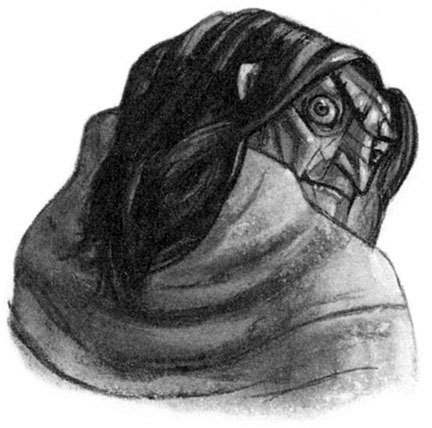
    Picture credits: Mad-Eye pic from movie
    drawing of Mad-Eye by Mary GrandPre