Tuesday, September 11, 2012

Neville Longbottom - The Perfect Foil

From time to time on this blog, I've looked at various Harry Potter characters and analyzed which archetype they fit.  Harry, we know is the hero.  Fluffy serves as a Threshold Guardian.  Fred and George are Tricksters.  JK Rowling uses many Heralds throughout the series.  And Snape is the perfect Anti-Hero.

But it wasn't until a writer in the last workshop I presented at Savvy Authors asked me what Neville's role was that I realized he was the perfect Foil.  The role of a Foil is to contrast and compare with another character in order to show similarities and distinctions.  Neville provides this service for Harry.

'The odd thing is, Harry,' [Dumbledore] said softly, 'that it may not have meant you at all. Sybil's prophecy could have applied to two wizard boys, born at the end of July that year, both of whom had parents in the Order of the Phoenix, both sets of parents having narrowly escaped Voldemort three times. One, of course was you. The other was Neville Longbottom.' (OotP, p. 37)

Born on the second to last day of July, orphaned emotionally if not physically by Voldemort, and brought up by a grandmother who is not exactly the warm, mothering type, Neville is just a shade off of Harry's own journey.  But whereas Harry quickly finds his place on a broom and the Quidditch pitch, Neville, with his self-doubt, lack of coordination, and memory problems has a harder time finding his way.

For the first 3 books, Neville serves primarily as a contrast to Harry, essentially making Harry look better, but also occasionally showing him up.  Neville is the only one that stands up to Harry, Ron, and Hermione at the end of PS/SS when they are about to go it alone again, breaking all kinds of rules, and losing more points for Gryffindor.


It is in Goblet of Fire, due to the duplicitous help of Pseudo Mad-Eye that Neville's strength and knowledge comes more into the limelight as his knowledge of magical plants helps Harry triumph in the second Tri-Wizard challenge.  His character truly starts to shine in OotP where he is one of the first to state his loyalty to Harry after the Daily Prophet's smear campaign.  Neville becomes an important member of Dumbledore's Army, remaining the last student standing besides Harry in the battle at the Ministry.

And, of course, who can forget that it was Neville who sliced the head off Voldemort's last remaining Horcrux by beheading Nagini with Gryffindor's own sword?  A sword he won by standing up all alone to Voldemort's flaming attack and refusing to join Voldemort's side -- just as Harry did in his first year.  Neville has gone from being a lost, unpopular child, falling off his broomstick, to being "The Man," the one who stayed at Hogwarts and defied the Death Eater's regime, learning the full secrets of the Room of Requirement, and thus providing an entry port for Harry into the final battle.

Neville was an excellent Foil, but one who did not exist merely to define the hero.  JK Rowling gave this foil his own hero's quest, which while secondary to the series' protagonist's, still left his fans cheering.

Have you written a Foil into your story? What aspects of your protagonist did your Foil serve to compare and contrast?

Also, please join me Friday for a special blog post from Sharon Ledwith, author of The Last Timekeepers and the Arch of Atlantis, from Euterpe Books.  Euterpe is celebrating our Back to School Extravaganza this week with a blog fest, free books, and a special book club package giveaway.  As part of this celebration, I'm also blogging today at Jami Gold's place with a post on Small Publishers: Tips for Success.  Hope you will join our fun!


(Check Out JK Rowling's Newest Release -- Harry Potter and the Cursed Child here!) 

Wednesday, August 22, 2012

My Favorite Research Resources for Fantasy Writing

I admit it.  I'm one of those writers who gets so caught up in her research that I can just live there.  I LOVE learning about the secrets of the old mystery cults or how people transitioned from hunter-gatherer to agrarian at Catal Huyuk (Çatal Höyük).  And when writing, my OCD comes out to the point that I must know exactly the titles Artemis of Ephesus would have been called by in 52 BCE and how sound-proof the earthen walls were in the subterranean cities of Cappodocia.  (All of which give you hints to my current WIPs).

So I spend way too much time researching, but I love it.  In fact, that's part of the reason as to why I write in the genres that I do, because I'm naturally drawn to these questions and subjects.  I want to know and experience how people lived before, perhaps because it helps me understand who we are in our central core.

I thought it might be fun to share with you some of my favorite resources.  Some of these may seem a bit wacky, and others hard to find, but they all have something unusual going for them.


Joseph Campbell - If you're a writer, you know The Man.  I'm sure you've read, or at least looked at, The Hero With a Thousand Faces.  But have you looked beyond this fabulous book to his multitude of other works on myths from various cultures and centuries?  If you want to really dig down deep and understand what these old stories were all about, the conflicts of the heroes and heroines that we still struggle with today, and why universal archetypes speak to us so deeply, then you must check out his other work as well.


Manly P. Hall - This one takes a dip into what some might consider a bit wacky, but also fascinating.  To be very honest, Hall is very much inline, in my POV, with Campbell, but wrote before him, and perhaps was one of his influences.  However, while Hall was recognized in his day for his achievements, he never attained the kind of fame Campbell did, perhaps because he focused more on the mystical and occult.  His greatest work, The Secret Teachings of all Ages, originally printed in 1928, is absolutely breathtaking in its speculation, insight, and comprehensiveness, but NOT a light read.  Fortunately, they now have it in a smaller format than the monstrous (and expensive) edition I bought years ago!


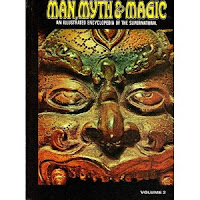
Man, Myth, & Magic - This is a series of encyclopedias edited by Richard Cavendish and published in the 1970s.   (Remember those pre-Wiki days, when physical encyclopedias of various topics were actually published?)  I stumbled across volume one at a local used bookstore one day and was so captivated that I sought out and bought a complete set on e-bay.  I love being able to flip through the pages and see various pictures and topics on bits of myth and esoterica that I would never think to look up.  This frequently sparks fresh ideas for whole new stories as well as bits of details for one I'm already working on.  And yes, it also inspired the title for my blog title 2.0. :-)


TourEgypt.com - If you've read this blog for any length of time, you know my fascination with Egyptian myths and how Rowling incorporated them into her stories.  One of my favorite online sources for researching these myths may seem a bit unusual.  TourEgypt seems to be a commercial tour site, but the depth of their articles are really phenomenal.  Any time I would google a specific detail that I was trying to hunt down, this site regularly popped up, until I started hunting there first.  I've linked you to one of their examples on the Coffin Texts, which I used in researching one of my early-days Mugglenet articles.

Crystalinks.com- Finally, another online resource that, like the one above, kept showing up so much whenever I'd google something, that I started using them as a main resource.  CrystalLinks seems to be a New Age type of site, so I will usually use whatever material I find there as a starting point and then research it further.  I have nothing against New Age, but their focus can sometimes be on how the pagan religions are re-envisioned today, and if I'm researching a story that needs to know how that myths was understood in antiquity, then I must probe further.

I'm sure I'll think of another fabulous resource as soon as I post this, but then, I can always update it as I go.

Would love to know if you've used any of the resources I've mentioned above.  Also, what are some of your favorites?

Also, don't forget that I'm presenting an abbreviated version of my Writer's Guide to Harry Potter workshop this week at SavvyAuthors.  Along with that, I'll be giving away a free critique of the first three chapters to one of the Savvy Authors Summer Symposium participants!  You can learn more about my editing background here.

Monday, August 13, 2012

The Highly Sensitive Person and the Writer

I want to share a book with you that transformed my life.  Reading this book, along with the prompting of my good friend and early writing partner, is why I am a writer today.

But before the encouragement I found inside this book to pursue my own creativity, it first taught me to value it.  The Highly Sensitve Person: How to Survive When the World Overwhelms You by Elaine Aron is a must-read for creatives of all types, especially writers.  When I first read HSP (at a much younger age than I am now), I saw, for the first time, all my weirdness and sensitivity in a positive light.

After devouring HSP, I came away with a few important understandings.

1) Highly Sensitive People (HSPs) have always existed in human society because they serve a critical role in our survival as a species.  Due to their extremely sensitive nature, they are more in-tune with the environment which surrounds us all, and thus are the lookouts.  It is the HSP's ability to hear, smell, see, and taste stronger, as well as sensing more subtleties of people and environment, that warns the rest of the human pack of impending danger so we all can react before it is too late.

2) However, as a pack, too many HSPs within a human tribe would make for a very jittery bunch, perhaps overreacting and thus being led into the danger they hope to escape.  Therefore, it seems we have evolved so that about 15% of the population is made up of HSPs, while the other 85% is made of personality types in other roles equally important for survival, such as leader, warrior, etc.

3) HSPs have served society as prophets, artists, storytellers, spiritualists, and, truly, creatives of all flares.  Though sometimes not valued as highly in today's society as CEOs and high-powered professionals (our modern-day leaders and warriors), we still serve an important role not only in noting danger and alerting others, but also in reflecting and shaping culture, in all its positive and negative glory, through the work we create.  If humans evolved as the one animal able to understand symbols, it is the ability of the HSP to sense and translate these symbols that stands at the crux of all human development.

4) I'm okay.

Seriously.  Before reading this book, I'd always been down on myself because of my sensitive nature.  I was too introverted, too socially awkward...just too darn sensitive.

This book came to me at exactly the right time to transform my life, not only emotionally, but also physically.  You see, most people who are HSP in personality are also HSP in body as well.  I'd just gone through a very difficult pregnancy and come out of it with a bit of postpartum depression.  Reading HSP led me to seek other books on the subject, and the one I stumbled onto was Potatoes not Prozac, which taught me the benefits of healthy eating.  I dug into it whole-hog (ha!), and within one month, I was totally recovered, happier, and more energetic than I had been in years.

Why am I sharing something so personal with you?  Because it is my belief that most writers are HSP in mind as well as body.  We joke a lot about all the chocolate, sweets, and Mountain Dews we need to get through the day, but it is my experience that sugar is the last thing an HSP needs.  It may boost you up initially, but all that brain fog, loss of energy, and depression you'll suffer through later is so not worth it.

I don't want to go into a preachy tone here, cause it is definitely something I still struggle with as well, but if any of this rings true to you, I just want to point you in the direction of these books, plus a couple more I've discovered since then, which I will link to below.  If you're interested, though, I've got more info on my TurkishDelight blog, filled with healthy recipes, which I started long before this one.  I'm hoping to post more regularly there soon.

Being an HSP is a blessing.  Without it, I don't believe I could delve so deeply into the great subconscious to create fictional worlds and characters who reflect the reality of our times.  However, like everything, there is a dark and light side.  Understanding my nature better, I know I must, in the words of Mad-Eye be on "constant vigilance" against the things that put my sensitivities out of whack

How about you?  Have you read any of these books or anything like it?  Do you consider yourself an HSP?

Sally Fallon's Nourishing Traditions (highly recommend! my favorite)
The Inflammation Syndrome by Jack Challem (just getting into this one, but great so far)

Wednesday, August 8, 2012

My New Release, Workshop, & Pitch Session for Musa Publishing

Last week, I mentioned that I had some new projects I'd been working on. Now, I'm eager to share some of what's been keeping me busy and away from the blog.  A couple of other projects will have to wait for another day. ;-)


First, I'm thrilled to be included in Journeys of Wonder vol 2, an anthology of genre fiction.  I'll be joining the fabulous Lisa Gail Green, Leslie S. Rose, and Ian Kezsbom from the first volume.  My short story, "Lighting the Sacred Way," is set in ancient Ephesus -- so you know it has some refs to my favorite myths.  I hope you'll check it out when the collection is released in the fall.


Second, I've been asked to participate in SavvyAuthors' Summer Symposium.  During the week of August 20-26, I will be presenting a portion of A Writer's Guide to Harry Potter workshop, focusing on the mystery plotting throughout the series and the characterization of Snape.  I hope you can join me.  The symposium will be free to SavvyAuthors' members, but everyone can take the class.  Sign up here.

Third, I've recently become an editor at Musa Publishing, working in their YA imprint, Euterpe.  I'm thrilled to join the Euterpe team and have already read some excellent manuscripts that I'll shout about when they are released.


And finally, to put two and three together, at the end of my workshop for SavvyAuthors, Ellen Brock, head editor at Euterpe and co-head editor for Pan (Musa's YA-GLBT line), and I will be taking pitches all day on Saturday, August 25.  You can read more about what we will be looking for and how to participate here.

I'm really enjoying working with new people, both at Journeys of Wonder and Euterpe Books, who are excited about quality fiction and are on the cutting edge of the changing dynamic in publishing.  Can't wait to share with you more of my experiences!

Check Euterpe out on Twitter!

Monday, July 30, 2012

My Blog, It Is a'Changing


I'm a slow learner.  Sometimes painfully slow.

You may have noticed that in recent months, I've been slower than I used to be to blog, respond to comments, and Tweet.  To be honest, I'd gotten a bit tired of always talking about good ol' Harry.

Not that I don't love Harry Potter and J.K. Rowling's incredible writing... I do!  But I love so much more than that.  My interests are wide-ranging.  And yet, because I believed a blog would work better with a decided focus, and with my past experience I'd carved out my niche here as Harry Potter for Writers, I didn't want to muddy the bloggy waters.

So, inevitably, I got a bit bored, and was thus slow to get on line and share with all my friends here.

Here comes the slow-is-me part.  I recently realized, it doesn't have to be that way!  No, I don't have to give up writing about craft techniques I've discovered in the fabulous Rowling writings, but I don't have to limit myself to that either.  I can write about new discoveries in anthropology, interesting secrets from old mystery cults, what's happening in the world of publishing today, reviews from some of my favorite books, even how to make kefir.

I'll be honest, I haven't just been AWOL because I was bored.  I was also writing, quite a bit, and editing as well.  And the result of all that work is that I have some news that I hope to tell you about soon...perhaps later this week.

So, it's time to change.  Starting now, Harry Potter for Writers is now Myth, Magic, and Mystery.  I'll still write Harry Potter posts, but in between those will come more frequent, and shorter, posts on anything that interests me which I hope you'll find entertaining or enlightening as well.

For example, did you know that cave-age parents not only let their children draw on the walls, they encouraged it?  New research on cave art in western France shows that many of the wavy designs are actually finger flutings done by children, one as young as three.  One area of the cave seems to have been so filled with child flutings that it may have been set aside especially for them.

Can't you just picture a group of mothers, trapped inside the cave on a cold and rainy day with restless kids, giving them some mud and charcoal and having an impromptu art lesson?  Or perhaps a shaman would show the children, one at a time, how to make a mark on their world while helping them explore their creativity.

That's part of what I love about writing -- getting so deeply into someone else's POV, that I feel a connection with a person totally outside my own social network, culture, even century.

My drawings on the wall of this blog-cave are changing, but I'm still here, still the same, just widening the scope of what I share.  I hope you'll enjoy it and share back with me! :-)

What's been going on with you lately?  Anyone have good news to share that I may have missed out on?


Monday, July 16, 2012

A Muggle-Studies Professor's Report from Ascendio, a Fan-Writer Conference


A couple of days ago, I returned from Orlando where I attended the fabulously well-run Harry Potter fan conference, Ascendio2012.  I'd been invited months ago to present my Writer's Guide to Harry Potter workshop as part of their Quill Track, a mini-conference within the fan/scholar symposium specifically geared to writers.

Fan conferences like Ascendio are usually a very different animal than writer conferences like RWA or SCBWI.  To be perfectly honest, I usually feel more at home at the writer conference.  While I'm definitely a fan of Rowling's work and love to hunt out every hidden clue or mythical reference in her brilliant subtext, I admit to being a bit of the odd-woman-out in fan culture where most everyone dresses in wizard robes, will stand in lines for hours to see the YouTube stars of StarKid, and get into heated arguments over whether their favorite ship should have sailed instead of the ones Rowling set afloat.

I say none of this with any disrespect whatsoever.  Quite the opposite.  I find the people at fan conferences incredibly energizing and quite enlightening.  I've learned so much about what readers care passionately about...which can be quite different than the query guidelines and craft techniques which you'll learn in workshop after panel at a writer conference like RWA.  And yet, to get published, you must master things like POV and the dreaded synopsis in order to have readers who may debate minute aspects of your worldbuilding as if it were real or craft their own stories based on your characters.

Which is why Ascendio, the latest conference sponsored by the HP Education Fanon was so exciting for me.  While many of the other fan conferences I'd attended included workshops, like mine, geared to writers, Ascendio had planned a whole writer's track, The Quill Track, complete with booksignings by famous authors and pitch sessions to coveted agents.

This combination is a spark of brilliance and pairs beautifully because fan culture is filled with creatives.  So, at Ascendio, not only do you find a subset of people going wild over the Pygmy Puffs at the Craft Faire, but you'll also encounter a subset hyped up by a screening of fanfilms, or live theater written and produced by fans, and still others dancing the night away to the awesome Wizard Wrock.  With the new QuillTrack, a home was provided for writers of original and fanfiction alike to get together to study and improve their craft and learn how to get it before readers to develop their own fans.

And here is where the key difference can be seen between a conference like Ascendio to RWA -- while the average attendee at RWA is well into her adult years and may be approaching middle-age, the average attendee at a fan conference is an older teen or in her early twenties.  Yes, there are plenty of adults as well, especially at Ascendio, but the youth  energy drives this conference.  An energy that packs a room to hear the fabulous LogosPilgrim present a mystical reading on the spiritual insight gained through understanding Snape, but then empties before a presentation by a publishing professional that would be standing-room-only at RWA.  It's actually quite refreshing to see lines of fans clamoring to get into a screening of StarKids' A Very Potter Musical, a fan-based YouTube sensation that launched Darren Criss's Glee career, but open slots left in pitch sessions to wonderful agents like Joanna Volpe and Carlie Webber - something that would never happen at RWA.

Standing outside the agent pitch session, I found myself talking to a young Hufflepuff, around 16-17, calmly waiting her turn to pitch her completed YA novel to one of the agents.  I asked her to tell me about her story, and her eyes lit up and her hands waved into action as she got all enthused.  The details she shared spoke of a creativity I envied.  Her story envisioned a teen space odyssey that I thought might be quite marketable.  Then I asked how long was her novel.  9,000 words.

And this is the real reason why I love to speak at conferences like Ascendio, even if I find myself sitting alone there more frequently than I would at RWA.  In exchange for the energy I absorb and the fresh understanding I draw of what the reader desires most, I feel I have something valuable to offer in return.  These young writers, while deeply in touch with what appeals to them in regard to characterization and plotting, can be a bit fuzzy regarding the specific craft techniques that make a story readable and the arcane business practices (called publishing) one needs to navigate to get that work out there.  Some have fallen prey to those on the more unscrupulous side of the business.

If you're a YA writer, let me encourage you to attend a fan conference geared to a YA audience.  No, it probably will not give you the breadth of workshops and contacts that RWA or SCBWI can offer, but you'll meet and absorb something quite distinct and incredibly empowering -- the real, raw energy of the YA consumer.  It can take your breath away.

Unfortunately, Ascendio is the last conference HPEF has planned.  Some fandoms can continue conferences for years and years.  The Star Wars Celebration in Orlando still boasts 25,000 - 35,000 attendees annually.  But the Star Wars franchise has continued with new releases to fuel the fans' frenzy.

As the last Harry Potter book was published in 2007 and the last movie released a year ago, the divination waters for upcoming HP releases from Rowling are quite murky.  With the release of The Casual Vacancy in September, Rowling seems to be steering her career in a firmly different direction than the fantasy-driven youth culture of Harry Potter.  But she's not yet bolted the gates to Hogwarts.  Hope remains alive in the breast of the Harry Potter fan that we may yet, in a few years from now, see a new saga following Albus Severus, Rose, Teddy, Victoria... the next generation.

Perhaps it will be out in time for the children of the Potter generation to read it to their own kids...and then dress them in costume and wrock away at Ascendio part 2!

See you there!

Have you ever attended a fan conference?  What was your experience?

PS - To celebrate Ascendio and as a special offering to those attending my workshop, I listed The Boy Who Lived Comes to Die, my analysis of the ending of Deathly Hallows, for free on Kindle.  That offering runs through the end of today and anyone can download it for free.  If you don't have a Kindle, you can use the free Kindle for PC app.

Tuesday, July 3, 2012

The Casual Vacancy by JK Rowling Cover Reveal


So, there it is. The long-awaited cover.

What do you think?  There's really not much to comment on, is there?  I guess "X" marks the spot!

Also, they corrected Barry's name to Barry Fairbrother rather than the previously released Fairweather.  Release date is September 27, 2012 for English language.

Also, here is the new, updated description that includes page count:

When Barry Fairbrother dies in his early forties, the town of Pagford is left in shock.

Pagford is, seemingly, an English idyll, with a cobbled market square and an ancient abbey, but what lies behind the pretty façade is a town at war.

Rich at war with poor, teenagers at war with their parents, wives at war with their husbands, teachers at war with their pupils…Pagford is not what it first seems.

And the empty seat left by Barry on the parish council soon becomes the catalyst for the biggest war the town has yet seen. Who will triumph in an election fraught with passion, duplicity and unexpected revelations?

A big novel about a small town, The Casual Vacancy is J.K. Rowling’s first novel for adults. It is the work of a storyteller like no other.

The Casual Vacancy
512 pages

Monday, July 2, 2012

Harry Potter's Roman Bulla, A Mokeskin Pouch of Protection

Look at these two pictures and tell me what you see in common:


Emperor Nero as a boy


Did you notice the pouch worn around the neck of both boys?  Look closely:


The boy (Nero) in the statue is wearing a Roman bulla.  Harry is wearing his mokeskin pouch.

A few days ago, I was researching an item for my WIP and came across images I'd saved of the Roman bulla.  I'd noticed its likeness to Harry's mokeskin pouch years ago, but at that time didn't have a blog to share it with.  Now I do!

A bulla was a protective locket given to Roman boys by their fathers to wear around their neck from the time they were 9 days old until they reached manhood and became a Roman citizen (usually at 16).  The bulla could be made of various materials depending on the wealth of the family -- gold for the rich, leather for the poor.  Inside the bulla were amulets that served to protect the boy from harmful spirits and turn back the evil eye.


Unlike a Roman bulla, Harry's pouch was given to him not as an infant, but on his 17th birthday, the day in magical law where he legally attained adulthood.  However, like the Roman bulla, his pouch contained magical items which would serve in the coming campaign to protect him from evil forces.

Harry filled Hagrid's mokeskin purse, not with gold, but with those items he most prized, apparently worthless though some of them were: the Marauder's Map, the shard of Sirius's enchanted mirror, and R.A.B.'s locket.  He pulled the strings tight and slipped the purse around his neck, then sat holding the old Snitch and watching its wings flutter. (p. 132, Deathly Hallows, Scholastic)

Later, the Snitch, the letter from Harry's mom to Sirius, and Harry's broken wand would join the contents of the pouch.  While Harry's pouch was not given to him by his father but rather by Hagrid, one of his last remaining father figures, inside the pouch Harry placed items from James (Marauder's map), godfather Sirius (two-way mirror shard, also used with James), mentor Dumbledore (Snitch w/ the Resurrection Stone), as well as his mother (the letter to Sirius).   Each amulet, each item of his pouch, given by a parent or mentor, served to either protect Harry against Voldemort or else teach a valuable lesson in his final journey to manhood:

  • The Marauder's Map helped Harry "see" Ginny at Hogwarts while he was wandering in the wilderness.
  • The shards of Sirius's mirror with the other piece in Aberforth's protection served as a means for Aberforth to know when Harry needed help and to send Dobby.
  • R.A.B's locket was, of course, a faux-Horcrux, but also an important lesson on human nature in the treatment of those considered beneath them.
  • The letter from Lily to Sirius prepared Harry both for some of Dumbledore's backstory with Grindelwald as well as Lily's connection to Snape.
  • The Resurrection Stone inside the Snitch brought Harry the comfort of his deceased loved ones in his greatest time of need.
  • And Harry's broken Phoenix wand, and its resurrection, served as a final example of power and Harry's command over it rather than being controlled by it.


Harry wore his pouch throughout his campaign to seek out and destroy Voldemort's Horcruxes.  He also wore it to meet his death in the dark forest, where he pulled out the Resurrection Stone to bring him the comfort of his mother, father, Sirius, and Lupin by his side, as well as into the final battle.  The last time we see the pouch is when Harry pulls his old wand out of it and uses the Elder Wand to resurrect his more beloved, and less powerful, Phoenix wand.

If deliberate, and I think it is, JK Rowling's use of Harry's mokeskin pouch as a modern wizard bulla, is a wonderful example of all the little Easter eggs she hid in subtext for her readers to find and delight in.  Knowing and understanding the Roman bulla is completely unnecessary to understanding the role of the mokeskin pouch in Deathly Hallows.  But finding the connection sharpens its role in the story and gives a little thrill to the Harry Potter fan.

Have you ever hidden any little Easter Eggs in a story?