Monday, November 5, 2012

In Storytelling, Emotion Trumps All

Last year, in honor of NaNoWriMo, I did a series of short posts, taken from Harry Potter, to encourage and inspire NoNo participants.  As I know writers are intent on keeping their focus on writing and don't have much time to read blog posts, I kept them short (for me) and (hopefully) sweet.

I'm late to the gate, but plan to repeat that this year, though it will probably be 2-3 times a week rather than every day.

For this first post, I thought I'd go write to the heart of the matter - emotion.  When I present my HP for Writers workshop, I usually start with the three things which I believe drove HP to the stratosphere of success: 1) lovable, quirky characters, 2) fantastically detailed, fun world building, and 3) an engaging series-spanning mystery.  However, what lies beneath and powers all of these is the emotional conflict Harry and his friends face in each book, and the emotional response their adventures and interactions arouse in the reader.

I've read a couple of articles recently warning writers not to let their words get in the way of telling a good story, and reminding us that our  largest audience is not other writers, but readers -- who have a different set of priorities than our writer friends.

I think for many of us who care deeply about craft, we can get so focused on crafting our words, that we forget to enthrall our reader with a deeply-felt emotional story.  To be honest, when we hear ourselves complaining about how this-or-that book made it onto a bestseller list, this is often the reason why.  That author may have not written with exquisite craft, but I guarantee you they had a storyteller's heart that elicited emotions in their reader.

Think back to your best-loved books, especially the ones from perhaps younger days that you dog-eared favorite passages.  Were those passages where the prose was luminescent, flowing like a river through the sublime subconscious?  Or did they rock with emotion?  Emotion that gripped you, made you hold your breath, or wish you were in those pages?

In looking back at my favorite Harry Potter book, Goblet of Fire, I'll share a passage with you that would be dog-eared if I still did that to a book. :-)

     A torrent of sound deafened and confused him; there were voices everywhere, footsteps, screams....He remained where he was, his face screwed up against the noise, as though it were a nightmare that would pass.... 
     Then a pair of hands seized him roughly and turned him over. 
     "Harry! Harry!" 
     He opened his eyes. 
     He was looking up at the starry sky, and Albus Dumbledore was crouched over him. ...
     Harry let go of the cup, but he clutched Cedric to him even more tightly. He raised his free hand and seized Dumbledore's wrist, while Dumbledore's face swam in and out of focus. 
     "He's back," Harry whispered. "He's back. Voldemort." 
     "What's going on? What's happened?" 
     The face of Cornelius Fudge appeared upside down over Harry; it looked white, appalled. 
     "My God - Diggory!" it whispered. "Dumbledore - he's dead!" 
     The words were repeated, the shadowy figures pressing in on them gasped it to those around them...and then others shouted it - screeched it - into the night - "He's dead!" "He's dead!" "Cedric Diggory! Dead!" 
     "Harry, let go of him," he heard Fudge's voice say, and he felt fingers trying to pry him from Cedric's limp body, but Harry wouldn't let him go. Then Dumbledore's face, which was still blurred and misted, came closer. 
     "Harry, you can't help him now. It's over. Let go." 
     "He wanted me to bring him back," Harry muttered - it seemed important to explain this. "He wanted me to bring him back to his parents...." 
     "That's right. Harry...just let go now...." 
     Dumbledore bent down, and with extraordinary strength for a man so old and thin, raised Harry from the ground and set -him on his feet. Harry swayed. ... Fudge was saying loudly. "He's ill, he's injured - Dumbledore, Diggory's parents, they're here, they're in the stands...." 
     "I'll take Harry, Dumbledore, I'll take him -" 
     "No, I would prefer-" 
     "Dumbledore, Amos Diggory's running...he's coming over....Don't you think you should tell him - before he sees - ?" 
     "Harry, stay here -" 
     Girls were screaming, sobbing hysterically....The scene flickered oddly before Harry's eyes.... 
The emotion of this scene, especially when I first read it as a young parent, was so deep and so real, it struck a chord with me.  I've analyzed part of why I think it worked on my post about the power of touch.  But there's such a complex web of emotions being woven into this scene: Harry's horror at witnessing the murder of Cedric and his vow to his spirit; Dumbledore's care and concern for the injured Harry; the news reaching Cedric's parents in the stands of the loss of their son (the worst horror of all); and the emotional reactions from Cedric's friends.

NaNoWriMo is the month in which we commit to starting and finishing a complete novel, in which we turn off our internal editor and just keep going.  It's an excellent time, therefore, to remind yourself to focus on the one thing that matters above all...the emotions of your characters and the story you are telling.

Happy writing!

Question: What would be the primary emotional response you would be seeking from your reader in the story you are currently writing?

Friday, October 19, 2012

Lighting the Sacred Way, A Spooky Tale of Ancient Ephesus

I am very excited today because I have a new short story out, and it is unlike any I've done before.  Lighting the Sacred Way is a bit of suspense/bit of horror, set in ancient Ephesus.  Ephesus is one of my favorite places to visit in Turkey and I've long been fascinated with Artemis of Ephesus and the Temple.  For me, it was great fun bringing all that back to life...especially in a spooky sort of way.

What "Lighting the Sacred Way" refers to is the processional route from the Temple of Artemis, around the holy mountain, through Ephesus, and back to the temple where the people would parade carrying a statue of Artemis.  It was a way of bringing Artemis to her people, into her city, since the temple actually lay well outside of Ephesus.

Artemis of Ephesus fascinates me because she is unlike other representations of Artemis throughout the Greek/Roman world.  She seems to be descended more from a local mother goddess than the virgin huntress.  In fact, you can see resemblances to Cybele in the look and worship practices of Artemis.  I won't say too much, because I think I'll do a whole blog post on it sometime soon.


I had fun researching this story, though being as obsessive as I am about details, sometimes went a bit overboard.  Ephesus was quite a large city and a cosmopolitan port of the Roman Empire for several hundred years.  So there was a lot to learn to make sure I had the details accurate for the time period in which my story was set.  I'm sure I've probably mess up somewhere.

Also included in Journeys of Wonder are fabulous stories by Lisa Gail Green, Trysta A. Bissett, Leslie S. Rose, and Ian Kezsbom. I've included some promo material from the publisher below to tell you more about each of these stories of wonder.  But, let me know in comments -- as a writer, what was your favorite setting to research?  Or as a reader to read?

~~~~~~~~~~~~~~~~~~~~~~~

Journeys of Wonder: Volume 2 – the second anthology in a series of genre fiction. Quick on the heels of Volume 1 this new volume brings back some favorite authors and introduces a couple of new ones.


Featured in this volume are five incredible tales – each of which will leave you in wonder and amazement.

  1. CAL by Lisa Gail Green: A young man challenges his father after falling in love with a cybernetic life form.
  2. The Terrible, Perfect Duet by Trysta A. Bissett: Cicadas, insomnia, and high school. What could possibly be more horrifying?
  3. Helios by Leslie S. Rose: As humanity flees the wrath of Earth's dying Sun, a daughter's quest to claim her birthright jeopardizes the chance to escape.
  4. Encrypted by Ian Kezsbom: Spies. Codes. Murder. A thriller about a man on the run – hiding a secret that others would kill for.
  5. Lighting the Sacred Way by S. P. Sipal: Set during the time of the Roman Empire, a woman tries to vanquish the evil spirit residing within her. One that arrived on the day her husband was murdered.
 On sale only at Amazon.com! $.99 for a limited time or free through the Amazon Prime lending library!

Visit us at: www.journeysofwonder.com

Monday, October 15, 2012

Writing Food into Your Story

Some of the neat aspects of world building many fans cite as their favorites in JK Rowling's Harry Potter series are the imaginative bits of food details she weaves into the stories.  Who wouldn't want to eat a cockroach cluster or suck on a blood-flavored lollipop?  In a very early interview, JKR is quoted as saying:

"...the one book that very much influenced Harry Potter was Little White Horse by Elizabeth Goudge . . . I liked all the food descriptions and I try to put lots of descriptions about meals into all the Harry books."
For her food references, JKR drew upon a variety of sources.  Much of the food eaten at Hogwarts are standard British or Scottish fare - such as Yorkshire Pudding (GoF) and shepherd's pie (CoS).  However, when Durmstrang and Beuxbaton's come to visit in GoF, we are treated to bouillabaisse and blancmange.  Hagrid is known for his treacle fudge that glues your teeth together, while Molly Weasley prepares good home cooking, such as boiled potatoes and mince pies.  And who could forget the midnight deathday feast for Sir Nearly Headless Nick in CoS with its maggoty haggis and slabs of cheese covered in mold?

Wherever possible, JK Rowling used food to help build her world, describe her characters, and add a further magical element into her stories.  Sometimes the food even hid a critical clue, such as the Chocolate Frog card that contained the name of Dumbledore's partner - Nicolas Flamel.


What do your characters eat?  Have you thought about the differences in what your heroine snacks on as opposed to your villain?  Have you considered using the contrast provided by a health-food nut and a junk-food junkie to your advantage?  If you're writing a historical, have you researched what food was available in that day and how it was prepared?  If writing a fantasy, have you extended your world building into the kitchen?  And what kind of creative masterpieces have you come up with?

We all eat.  That is one commonality all readers share, no matter their taste in genre.  And so why not appeal to your readers through your character's stomach as well?  Just be sure not to slow the pacing of your book for a character to sit and chow down.  Food should always be included, when it is used, as part of the action, not a distraction from it.

The food we eat daily is such a basic part of who we are as people, that, as an author, in order for me to know my characters and convey them on the page, I have to know what they would eat as well, even if I don't include all the details.  This is more difficult when dealing with a historical setting...but fortunately, there are a lot of good resources online to help out and even a few authentic ancient cookbooks published.  But for me, any excuse to buy a new cookbook is a good one! :-)  

For those of you who, like me, love learning about ancient foods and may even want to prepare a recipe yourself, here's one from ancient Rome that is included in Mark Grant's Roman Cookery that is simple and sweet and easy to prepare:

Sesame Biscuits (Itrion)

Itrion: a thin biscuit made with sesame seeds and honey.  Anacreon records it: "I had lunch, breaking off a small piece of itrion and drinking a flask of wine." (Athenaeus: The Partying Professors)

Ingredients:
100 g/3 oz sesame seeds
60 g/2 oz clear honey
olive oil

Directions:

Pour the honey into a pan, bring to the boil and simmer for 10 minutes.  Add the sesame seeds and simmer for another 5 minutes, stirring frequently.  Spread the mixture as thinly as possible on a plate that has been previously greased with olive oil.  Flatten out with a spatula -- wetting the spatula from time to time will help the process.  Allow to stand for a couple of hours, then cut into wedges and serve as a sweetmeat.

Friday, September 14, 2012

Ye Olde Caves of Nottingham by Sharon Ledwith

Today I am thrilled to welcome to the blog Sharon Ledwith, author of The Last Timekeepers and the Arch of Atlantis from Euterpe Books, the YA/MG imprint of Musa Publishing.  Sharon is here with us today to celebrate Euterpe's Back to School Extravaganza week.

In getting to know Sharon, I've discovered that she's a writer after my own heart, sharing my love of research and a draw to the older myths and folklore.  I love the fascinating information she gleaned on the caves of Nottingham, perhaps because there's some striking similarities between them and the caves and underground cities of Cappadocia, Turkey, that I'm using in one of my stories.

So, please welcome Sharon to the blog, and I hope you enjoy learning more about this hidden gem of Nottingham's history.


YE OLDE CAVES OF NOTTINGHAM


In my middle-grade/young adult time travel book, TheLast Timekeepers and the Arch of Atlantis, my feisty group of adolescent characters’ first mission lands them in England in 1214 where they must find a young Robin Hood and his merry band of teens. Legend has it that one of Robin Hood’s haunts (besides the famous Sherwood Forest) was the village of Nottingham.

When I undertook the meticulous research needed to craft my novel, I came across an interesting fact about Nottingham I had never known: beneath the houses, shops, and offices of Nottingham are hundreds of caves. My eyes bugged and imagination went into overdrive, while I gathered fact after fact about the Nottingham caves. In truth, it was a little like panning for gold nuggets.

The end result of the information I gleaned is woven into my story, but I’d like to share some other interesting facts about these not-so-famous caves:


  • The earliest written record of Nottingham’s caves comes from a Welsh monk called Asser who when writing about Nottingham in 868 referred to the town as Tig Guocobauc, meaning house or place of caves in British. 
  • Nottingham has more man-made caves than anywhere else in Britain.
  • The exposed cliff of the sandstone outcrop made this an obvious place for the early citizens of Nottingham to make their home. The occupants of these cave houses were generally poor and the caves were known as pauper holes.   
  •  Each cave is unique and created for a specific purpose; some even have elaborate carvings, pillars and staircases.  
  • The softness of Nottingham’s sandstone makes it easy to excavate with hand tools, and the structural stability means that excavated caves are safe to use, even with buildings above them.
  •  Throughout the medieval period Nottingham continued to grow and prosper, becoming a centre for trades such as wool manufacture, tanning, malting, alabaster carving and pottery production.  A number of these activities were undertaken in Nottingham’s caves.
  •  Sandstone caves maintain a constant temperature of around 14 degrees Celsius/ 57.2 Fahrenheit and therefore made excellent cellars for the storage of ale.  
  • At the start of the Second World War new caves were excavated and old ones reused to act as Air Raid shelters. 


Believe it or not, few people in Nottingham are aware of this labyrinth, and fewer still have visited them. Unfortunately, in these modern times, a significant number of caves have been filled in with cement or bricked up, with others disappearing through natural collapse. There’s a special project underway called the Nottingham Caves Survey which hopes to survey and document all the caves under Nottingham, and bring awareness to this unique historical resource. I invite you to take a virtual tour if you dare: http://nottinghamcavessurvey.org.uk/


Susan here -- Thanks Sharon so much for sharing some of your research with us.

To celebrate our Back to School Extravaganza, Euterpe Books is giving away one copy of Sharon's ebook, plus Sharon has offered a prize package that includes a signed paperback novel of The Last Timekeepers and the Arch of Atlantis, a trading card, two wristbands (adult and youth size), and an Ionic Power wrist watch.  To enter, all you need to do is comment before Sunday evening.  I'll draw a winner for the book and the prize package on Sunday night (9/16) at 7 pm EST Extended to Monday night (9/17) at 10 pm EST!


We'd love to hear about your research.  What's some interesting tidbits you've uncovered researching for a story?  Or, has your research ever inspired you into a whole new story than what you had planned?


When 13-year-old Amanda Sault and her annoying classmates are caught in a food fight at school, they're given a choice: suspension or yard duty. The decision is a no-brainer. Their two-week crash course in landscaping leads to the discovery of a weathered stone arch in the overgrown back yard. The arch isn't a forgotten lawn ornament but an ancient time portal from the lost continent of Atlantis.

Chosen by an Atlantean Magus to be Timekeepers--legendary time travelers sworn to keep history safe from the evil Belial--Amanda and her classmates are sent on an adventure of a lifetime. Can they find the young Robin Hood and his merry band of teens? If they don't, then history itself may be turned upside down.


Bio:
Sharon Ledwith is the author of the middle-grade/YA time travel series, THE LAST TIMEKEEPERS, available through Musa Publishing. When not writing, researching, or revising, she enjoys reading, yoga, kayaking, time with family and friends, and single malt scotch. Sharon lives in the wilds of Muskoka in Central Ontario, Canada, with her hubby, a water-logged yellow Labrador and moody calico cat.

Tuesday, September 11, 2012

Neville Longbottom - The Perfect Foil

From time to time on this blog, I've looked at various Harry Potter characters and analyzed which archetype they fit.  Harry, we know is the hero.  Fluffy serves as a Threshold Guardian.  Fred and George are Tricksters.  JK Rowling uses many Heralds throughout the series.  And Snape is the perfect Anti-Hero.

But it wasn't until a writer in the last workshop I presented at Savvy Authors asked me what Neville's role was that I realized he was the perfect Foil.  The role of a Foil is to contrast and compare with another character in order to show similarities and distinctions.  Neville provides this service for Harry.

'The odd thing is, Harry,' [Dumbledore] said softly, 'that it may not have meant you at all. Sybil's prophecy could have applied to two wizard boys, born at the end of July that year, both of whom had parents in the Order of the Phoenix, both sets of parents having narrowly escaped Voldemort three times. One, of course was you. The other was Neville Longbottom.' (OotP, p. 37)

Born on the second to last day of July, orphaned emotionally if not physically by Voldemort, and brought up by a grandmother who is not exactly the warm, mothering type, Neville is just a shade off of Harry's own journey.  But whereas Harry quickly finds his place on a broom and the Quidditch pitch, Neville, with his self-doubt, lack of coordination, and memory problems has a harder time finding his way.

For the first 3 books, Neville serves primarily as a contrast to Harry, essentially making Harry look better, but also occasionally showing him up.  Neville is the only one that stands up to Harry, Ron, and Hermione at the end of PS/SS when they are about to go it alone again, breaking all kinds of rules, and losing more points for Gryffindor.


It is in Goblet of Fire, due to the duplicitous help of Pseudo Mad-Eye that Neville's strength and knowledge comes more into the limelight as his knowledge of magical plants helps Harry triumph in the second Tri-Wizard challenge.  His character truly starts to shine in OotP where he is one of the first to state his loyalty to Harry after the Daily Prophet's smear campaign.  Neville becomes an important member of Dumbledore's Army, remaining the last student standing besides Harry in the battle at the Ministry.

And, of course, who can forget that it was Neville who sliced the head off Voldemort's last remaining Horcrux by beheading Nagini with Gryffindor's own sword?  A sword he won by standing up all alone to Voldemort's flaming attack and refusing to join Voldemort's side -- just as Harry did in his first year.  Neville has gone from being a lost, unpopular child, falling off his broomstick, to being "The Man," the one who stayed at Hogwarts and defied the Death Eater's regime, learning the full secrets of the Room of Requirement, and thus providing an entry port for Harry into the final battle.

Neville was an excellent Foil, but one who did not exist merely to define the hero.  JK Rowling gave this foil his own hero's quest, which while secondary to the series' protagonist's, still left his fans cheering.

Have you written a Foil into your story? What aspects of your protagonist did your Foil serve to compare and contrast?

Also, please join me Friday for a special blog post from Sharon Ledwith, author of The Last Timekeepers and the Arch of Atlantis, from Euterpe Books.  Euterpe is celebrating our Back to School Extravaganza this week with a blog fest, free books, and a special book club package giveaway.  As part of this celebration, I'm also blogging today at Jami Gold's place with a post on Small Publishers: Tips for Success.  Hope you will join our fun!


(Check Out JK Rowling's Newest Release -- Harry Potter and the Cursed Child here!) 

Wednesday, August 22, 2012

My Favorite Research Resources for Fantasy Writing

I admit it.  I'm one of those writers who gets so caught up in her research that I can just live there.  I LOVE learning about the secrets of the old mystery cults or how people transitioned from hunter-gatherer to agrarian at Catal Huyuk (Çatal Höyük).  And when writing, my OCD comes out to the point that I must know exactly the titles Artemis of Ephesus would have been called by in 52 BCE and how sound-proof the earthen walls were in the subterranean cities of Cappodocia.  (All of which give you hints to my current WIPs).

So I spend way too much time researching, but I love it.  In fact, that's part of the reason as to why I write in the genres that I do, because I'm naturally drawn to these questions and subjects.  I want to know and experience how people lived before, perhaps because it helps me understand who we are in our central core.

I thought it might be fun to share with you some of my favorite resources.  Some of these may seem a bit wacky, and others hard to find, but they all have something unusual going for them.


Joseph Campbell - If you're a writer, you know The Man.  I'm sure you've read, or at least looked at, The Hero With a Thousand Faces.  But have you looked beyond this fabulous book to his multitude of other works on myths from various cultures and centuries?  If you want to really dig down deep and understand what these old stories were all about, the conflicts of the heroes and heroines that we still struggle with today, and why universal archetypes speak to us so deeply, then you must check out his other work as well.


Manly P. Hall - This one takes a dip into what some might consider a bit wacky, but also fascinating.  To be very honest, Hall is very much inline, in my POV, with Campbell, but wrote before him, and perhaps was one of his influences.  However, while Hall was recognized in his day for his achievements, he never attained the kind of fame Campbell did, perhaps because he focused more on the mystical and occult.  His greatest work, The Secret Teachings of all Ages, originally printed in 1928, is absolutely breathtaking in its speculation, insight, and comprehensiveness, but NOT a light read.  Fortunately, they now have it in a smaller format than the monstrous (and expensive) edition I bought years ago!


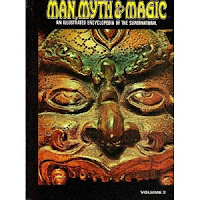
Man, Myth, & Magic - This is a series of encyclopedias edited by Richard Cavendish and published in the 1970s.   (Remember those pre-Wiki days, when physical encyclopedias of various topics were actually published?)  I stumbled across volume one at a local used bookstore one day and was so captivated that I sought out and bought a complete set on e-bay.  I love being able to flip through the pages and see various pictures and topics on bits of myth and esoterica that I would never think to look up.  This frequently sparks fresh ideas for whole new stories as well as bits of details for one I'm already working on.  And yes, it also inspired the title for my blog title 2.0. :-)


TourEgypt.com - If you've read this blog for any length of time, you know my fascination with Egyptian myths and how Rowling incorporated them into her stories.  One of my favorite online sources for researching these myths may seem a bit unusual.  TourEgypt seems to be a commercial tour site, but the depth of their articles are really phenomenal.  Any time I would google a specific detail that I was trying to hunt down, this site regularly popped up, until I started hunting there first.  I've linked you to one of their examples on the Coffin Texts, which I used in researching one of my early-days Mugglenet articles.

Crystalinks.com- Finally, another online resource that, like the one above, kept showing up so much whenever I'd google something, that I started using them as a main resource.  CrystalLinks seems to be a New Age type of site, so I will usually use whatever material I find there as a starting point and then research it further.  I have nothing against New Age, but their focus can sometimes be on how the pagan religions are re-envisioned today, and if I'm researching a story that needs to know how that myths was understood in antiquity, then I must probe further.

I'm sure I'll think of another fabulous resource as soon as I post this, but then, I can always update it as I go.

Would love to know if you've used any of the resources I've mentioned above.  Also, what are some of your favorites?

Also, don't forget that I'm presenting an abbreviated version of my Writer's Guide to Harry Potter workshop this week at SavvyAuthors.  Along with that, I'll be giving away a free critique of the first three chapters to one of the Savvy Authors Summer Symposium participants!  You can learn more about my editing background here.

Monday, August 13, 2012

The Highly Sensitive Person and the Writer

I want to share a book with you that transformed my life.  Reading this book, along with the prompting of my good friend and early writing partner, is why I am a writer today.

But before the encouragement I found inside this book to pursue my own creativity, it first taught me to value it.  The Highly Sensitve Person: How to Survive When the World Overwhelms You by Elaine Aron is a must-read for creatives of all types, especially writers.  When I first read HSP (at a much younger age than I am now), I saw, for the first time, all my weirdness and sensitivity in a positive light.

After devouring HSP, I came away with a few important understandings.

1) Highly Sensitive People (HSPs) have always existed in human society because they serve a critical role in our survival as a species.  Due to their extremely sensitive nature, they are more in-tune with the environment which surrounds us all, and thus are the lookouts.  It is the HSP's ability to hear, smell, see, and taste stronger, as well as sensing more subtleties of people and environment, that warns the rest of the human pack of impending danger so we all can react before it is too late.

2) However, as a pack, too many HSPs within a human tribe would make for a very jittery bunch, perhaps overreacting and thus being led into the danger they hope to escape.  Therefore, it seems we have evolved so that about 15% of the population is made up of HSPs, while the other 85% is made of personality types in other roles equally important for survival, such as leader, warrior, etc.

3) HSPs have served society as prophets, artists, storytellers, spiritualists, and, truly, creatives of all flares.  Though sometimes not valued as highly in today's society as CEOs and high-powered professionals (our modern-day leaders and warriors), we still serve an important role not only in noting danger and alerting others, but also in reflecting and shaping culture, in all its positive and negative glory, through the work we create.  If humans evolved as the one animal able to understand symbols, it is the ability of the HSP to sense and translate these symbols that stands at the crux of all human development.

4) I'm okay.

Seriously.  Before reading this book, I'd always been down on myself because of my sensitive nature.  I was too introverted, too socially awkward...just too darn sensitive.

This book came to me at exactly the right time to transform my life, not only emotionally, but also physically.  You see, most people who are HSP in personality are also HSP in body as well.  I'd just gone through a very difficult pregnancy and come out of it with a bit of postpartum depression.  Reading HSP led me to seek other books on the subject, and the one I stumbled onto was Potatoes not Prozac, which taught me the benefits of healthy eating.  I dug into it whole-hog (ha!), and within one month, I was totally recovered, happier, and more energetic than I had been in years.

Why am I sharing something so personal with you?  Because it is my belief that most writers are HSP in mind as well as body.  We joke a lot about all the chocolate, sweets, and Mountain Dews we need to get through the day, but it is my experience that sugar is the last thing an HSP needs.  It may boost you up initially, but all that brain fog, loss of energy, and depression you'll suffer through later is so not worth it.

I don't want to go into a preachy tone here, cause it is definitely something I still struggle with as well, but if any of this rings true to you, I just want to point you in the direction of these books, plus a couple more I've discovered since then, which I will link to below.  If you're interested, though, I've got more info on my TurkishDelight blog, filled with healthy recipes, which I started long before this one.  I'm hoping to post more regularly there soon.

Being an HSP is a blessing.  Without it, I don't believe I could delve so deeply into the great subconscious to create fictional worlds and characters who reflect the reality of our times.  However, like everything, there is a dark and light side.  Understanding my nature better, I know I must, in the words of Mad-Eye be on "constant vigilance" against the things that put my sensitivities out of whack

How about you?  Have you read any of these books or anything like it?  Do you consider yourself an HSP?

Sally Fallon's Nourishing Traditions (highly recommend! my favorite)
The Inflammation Syndrome by Jack Challem (just getting into this one, but great so far)

Wednesday, August 8, 2012

My New Release, Workshop, & Pitch Session for Musa Publishing

Last week, I mentioned that I had some new projects I'd been working on. Now, I'm eager to share some of what's been keeping me busy and away from the blog.  A couple of other projects will have to wait for another day. ;-)


First, I'm thrilled to be included in Journeys of Wonder vol 2, an anthology of genre fiction.  I'll be joining the fabulous Lisa Gail Green, Leslie S. Rose, and Ian Kezsbom from the first volume.  My short story, "Lighting the Sacred Way," is set in ancient Ephesus -- so you know it has some refs to my favorite myths.  I hope you'll check it out when the collection is released in the fall.


Second, I've been asked to participate in SavvyAuthors' Summer Symposium.  During the week of August 20-26, I will be presenting a portion of A Writer's Guide to Harry Potter workshop, focusing on the mystery plotting throughout the series and the characterization of Snape.  I hope you can join me.  The symposium will be free to SavvyAuthors' members, but everyone can take the class.  Sign up here.

Third, I've recently become an editor at Musa Publishing, working in their YA imprint, Euterpe.  I'm thrilled to join the Euterpe team and have already read some excellent manuscripts that I'll shout about when they are released.


And finally, to put two and three together, at the end of my workshop for SavvyAuthors, Ellen Brock, head editor at Euterpe and co-head editor for Pan (Musa's YA-GLBT line), and I will be taking pitches all day on Saturday, August 25.  You can read more about what we will be looking for and how to participate here.

I'm really enjoying working with new people, both at Journeys of Wonder and Euterpe Books, who are excited about quality fiction and are on the cutting edge of the changing dynamic in publishing.  Can't wait to share with you more of my experiences!

Check Euterpe out on Twitter!